What Is Ramadan? A Complete Guide to the Holy Month
Scholar Verified
Written by: M. Hamza
Researcher: Ayesha Rahman
Reviewed by: Omar Abdullah
Last Review: 9 September 2026
Our Ramadan information is carefully examined by a qualified Islamic reviewer to help ensure that religious details, references, and guidance are presented accurately and responsibly.
Ramadan is the ninth month of the Islamic lunar calendar and one of the most significant months for Muslims. It is a time of fasting, prayer, Quran recitation, charity, self-discipline, repentance, and spiritual reflection.
During Ramadan, Muslims who are required and able to fast abstain from food and drink from dawn until sunset. But Ramadan is about more than staying away from food and water. It is an opportunity to strengthen faith, improve character, control harmful habits, and become more conscious of Allah.
Why Is Ramadan Important?
Ramadan has a special place in Islam because it is the month in which the Quran was revealed.
Allah says in the Quran:
“Ramadan is the month in which the Quran was revealed as a guide for humanity with clear proofs of guidance and the decisive authority.”— Quran 2:185
This connection with the Quran makes Ramadan a particularly important time for worship and reflection. Many Muslims increase their Quran reading during the month and try to complete the entire Quran.
Ramadan is also the month in which Muslims observe the obligatory fast, making fasting one of its central acts of worship.
What Does Ramadan Mean?
The word Ramadan (رمضان) is the name of the ninth month of the Islamic calendar.
For Muslims, however, Ramadan represents much more than a particular period of the year. It is a month dedicated to developing taqwa, which can be understood as greater awareness and consciousness of Allah.
The Quran explains the purpose of fasting:
“O believers! Fasting is prescribed for you—as it was for those before you—so that you may become mindful of Allah.”— Quran 2:183
This verse highlights an important point: the purpose of fasting is not simply to experience hunger. It is intended to help a person develop greater self-control, God-consciousness, and obedience.
When Is Ramadan?
Ramadan is the ninth month of the Islamic calendar, which follows the cycles of the Moon rather than the Gregorian solar calendar.
As a result, Ramadan moves approximately 10–12 days earlier each year in the Gregorian calendar. This means Ramadan can occur during different seasons over time.
The beginning and end of Ramadan are traditionally connected with the sighting of the new moon. Some Muslim communities also use astronomical calculations when determining dates.
Because practices can differ between communities and countries, Muslims should follow the guidance of their local mosque or recognized Islamic authority when determining the beginning and end of Ramadan.
Ramadan dates between 2026 and 2030:
| Islamic Year | First Day | Last Day |
|---|---|---|
| 1447 AH (2026) | 18 February 2026 | 19 March 2026 |
| 1448 AH (2027) | 8 February 2027 | 8 March 2027 |
| 1449 AH (2028) | 28 January 2028 | 25 February 2028 |
| 1450 AH (2029) | 16 January 2029 | 14 February 2029 |
| 1451 AH (2030) | 5 January 2030 | 3 February 2030 |
How Long Does Ramadan Last?
Ramadan lasts for 29 or 30 days, depending on the lunar month.
Muslims fast each day of Ramadan from dawn until sunset. The exact fasting period depends on the location and time of year.
At dawn, the fast begins. Muslims then avoid food and drink throughout the daylight hours until sunset, when they break their fast.
What Is Fasting During Ramadan?
The Islamic fast is known as sawm or ṣawm.
During the fasting period, Muslims abstain from eating and drinking. Married couples also abstain from sexual relations during the daylight fasting period.
However, fasting is not only physical.
A Muslim is encouraged to control the tongue, behaviors, and desires as well. This means avoiding actions such as lying, backbiting, arguing, and other sinful behavior.
The Prophet Muhammad ﷺ emphasized the importance of good conduct while fasting. Fasting should therefore be accompanied by patience, self-restraint, worship, and good character.
Who Is Required to Fast?
Fasting Ramadan is an obligation for Muslims who meet the relevant conditions.
The Quran states:
“So whoever is present this month, let them fast.”— Quran 2:185
The Prophet Muhammad ﷺ also described fasting Ramadan as a compulsory act of worship. In Sahih al-Bukhari 1891, when asked about obligatory fasting, he identified fasting the month of Ramadan as the required fast.
There are, however, circumstances in which a person may be excused from fasting or permitted to postpone it.
These include certain cases involving:
- Illness
- Travel
- Pregnancy
- Breastfeeding
- Menstruation
- Old age or physical inability
The specific ruling and what a person should do instead can depend on their circumstances. Anyone unsure about their individual obligation should ask a qualified Islamic scholar.
What Is Suhoor?
Suhoor (or Suhur) is the meal eaten before the dawn fast begins.
Many Muslims wake before dawn to eat and drink, then prepare for the day's fast. Suhoor can also be an opportunity to make the intention to fast and begin the day with worship.
A balanced suhoor can help a person manage the fasting day. Many people choose foods containing protein, whole grains, fruit, vegetables, and sufficient fluids.
The exact eating time depends on the local Fajr time.
What Is Iftar?
Iftar is the meal or food with which a Muslim breaks the fast at sunset.
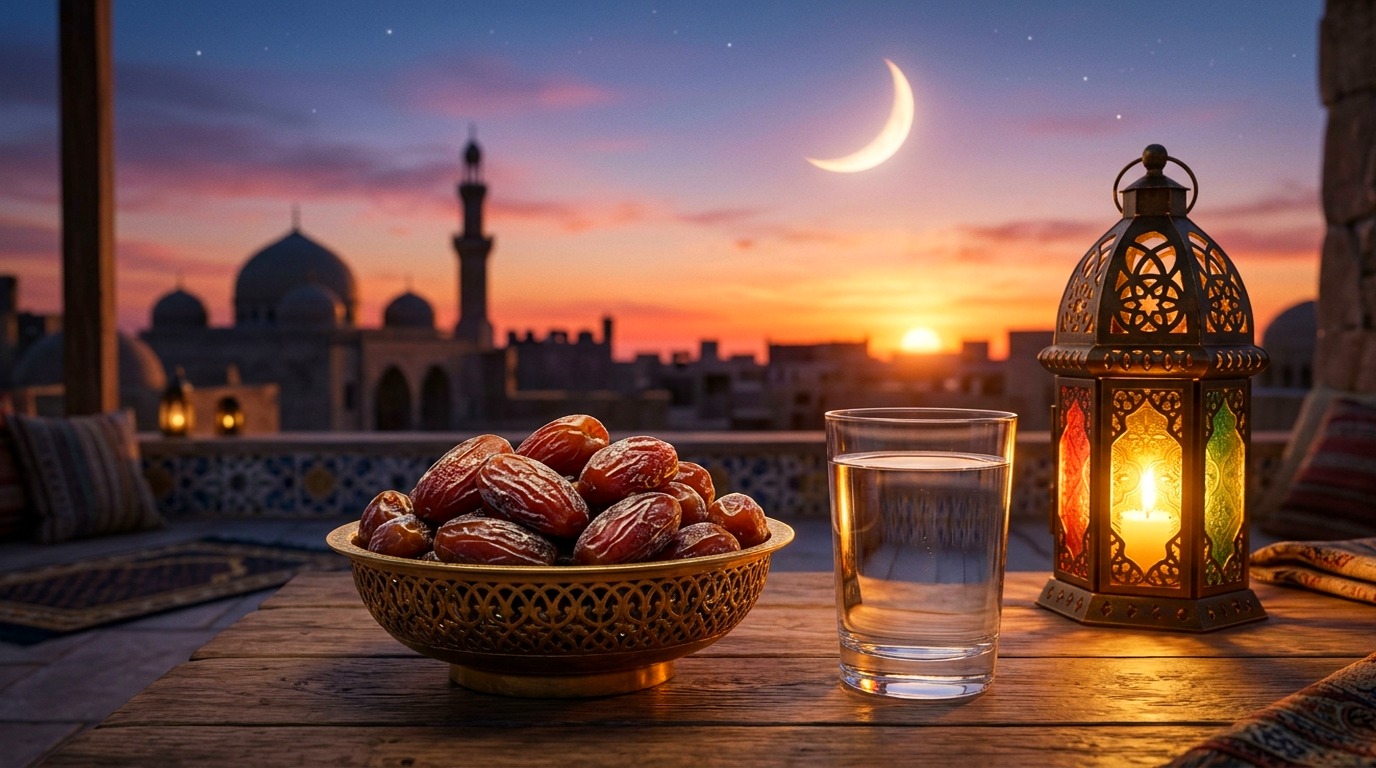
Many Muslims traditionally begin their iftar with dates and water before eating their main meal.
Iftar is also an important social part of Ramadan. Families and friends often gather together, and mosques and communities may organize meals for people to break their fast together.
Sharing food during Ramadan can also encourage generosity and strengthen relationships within the community.
What Do Muslims Do During Ramadan?
Fasting is only one part of Ramadan.
Muslims often use the month to increase different forms of worship and good deeds, including:
Reading the Quran
Ramadan is closely connected with the Quran because its revelation began during this month.
Many Muslims set a daily Quran-reading goal and try to complete the entire Quran before Ramadan ends.
Performing Extra Prayers
Muslims continue their five daily prayers and may also perform additional voluntary prayers.
One of the most well-known Ramadan prayers is Taraweeh, which is performed at night after the obligatory Isha prayer.
Making Dua
Ramadan is a time when Muslims increase their supplication to Allah.
People may make dua for forgiveness, guidance, family, health, the wider Muslim community, and their needs in this life and the Hereafter.
Giving Charity
Charity is another important part of Ramadan.
Muslims may give Sadaqah, support charitable projects, feed people, help families in need, or increase their financial giving.
The Prophet Muhammad ﷺ was especially generous during Ramadan. Ibn Abbas reported that his generosity increased during the month, particularly when Angel Jibril met him to review the Quran.
Improving Character
Ramadan provides an opportunity to work on personal behaviour.
A person may use the month to stop harmful habits, control anger, avoid gossip, speak kindly, forgive others, and become more patient.
This helps make fasting an act of spiritual development rather than simply a change in eating habits.
Ramadan and the Quran
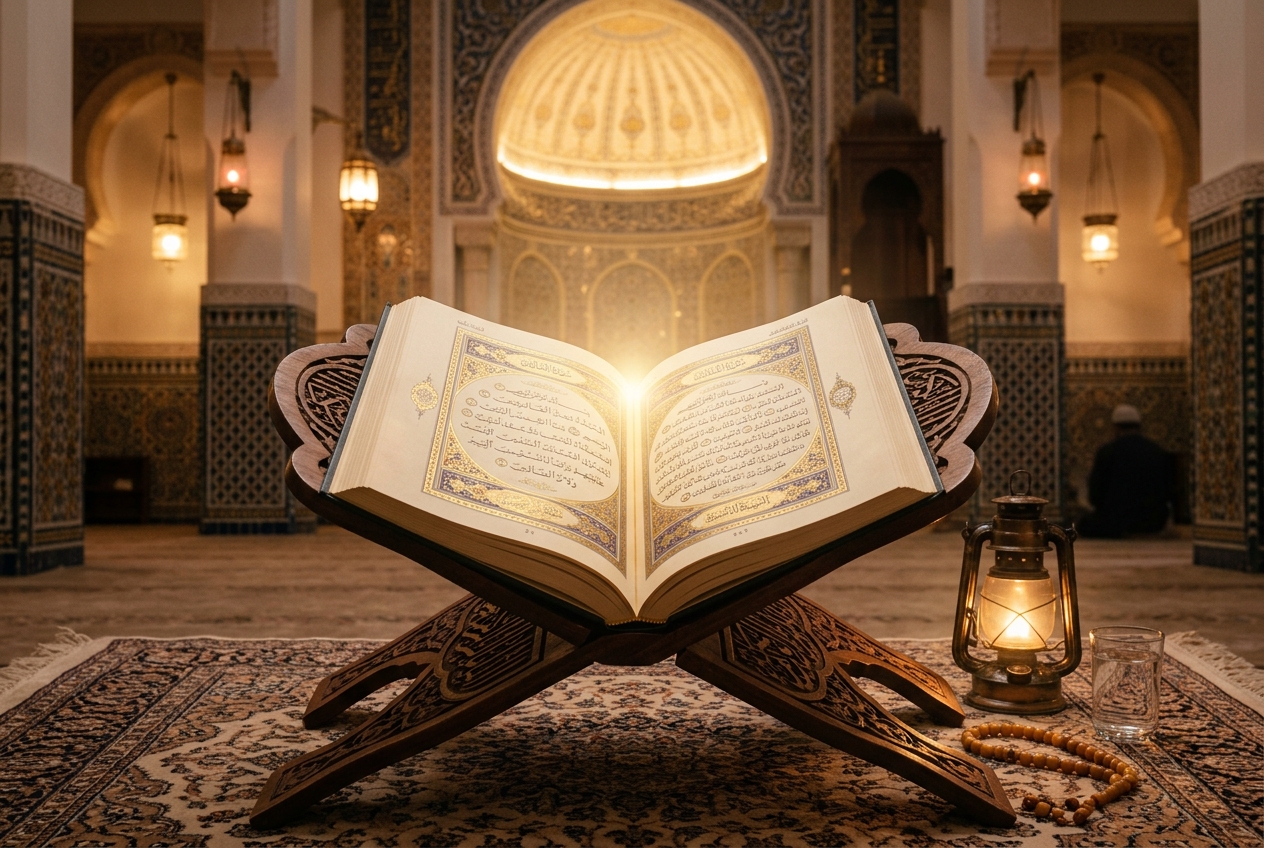
The relationship between Ramadan and the Quran is one of the defining features of the month.
Allah specifically identifies Ramadan as the month in which the Quran was revealed.
For this reason, many Muslims dedicate additional time to Quran recitation, memorization, study, and reflection.
Mosques may also organize Quran recitation during Taraweeh throughout Ramadan.
The Prophet ﷺ himself reviewed the Quran with Jibril during Ramadan, as reported by Ibn Abbas in Sahih al-Bukhari.
Laylat al-Qadr
The final part of Ramadan contains Laylat al-Qadr, commonly translated as the Night of Decree or Night of Power.
It is a particularly important night associated with the revelation of the Quran.
Muslims seek this night through increased prayer, Quran recitation, dua, remembrance of Allah, and other acts of worship.
Rather than focusing only on one particular night, many Muslims increase their worship throughout the last ten nights of Ramadan.
I'tikaf During Ramadan
Some Muslims observe I'tikaf during the final part of Ramadan.
I'tikaf involves dedicating time to worship and remaining in the mosque according to the applicable Islamic rules.
It provides an opportunity to step away from everyday distractions and concentrate on prayer, Quran, dua, dhikr, and spiritual reflection.
The practice is particularly associated with the last ten days of Ramadan.
Ramadan and Charity
Ramadan encourages Muslims to think beyond their own needs.
Experiencing hunger and thirst can remind a person of those who regularly struggle to obtain food and basic necessities.
Muslims may therefore increase charitable giving and acts of kindness during Ramadan.
Charity can take many forms. It may involve financial donations, providing food, helping a neighbour, supporting a family, or simply assisting someone who needs help.
What Is Eid al-Fitr?
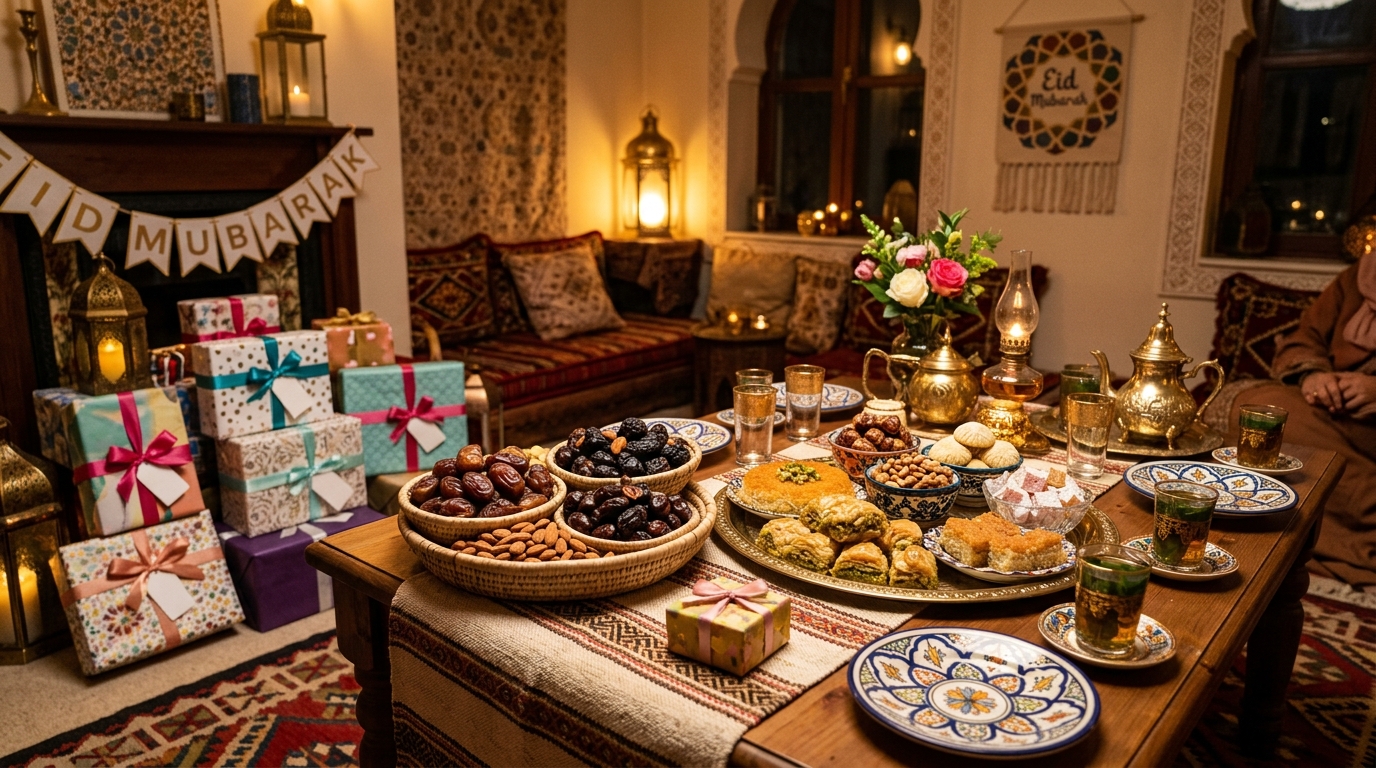
Eid al-Fitr, also known as the "Festival of the Breaking of the Fast," marks the end of Ramadan. It is celebrated on the first day of Shawwal, the next lunar month.
The greeting "Eid Mubarak" means "blessed holiday."
Ramadan ends with Eid al-Fitr, one of the major Islamic celebrations.
Eid al-Fitr marks the completion of the month of fasting. Muslims gather for the special Eid prayer, spend time with family and friends, share meals, and express gratitude to Allah.
Before the Eid prayer, Muslims are also required to give Zakat al-Fitr, subject to the applicable Islamic conditions. This helps provide for people in need and allows the wider community to share in the celebration.
Is Ramadan Only About Not Eating and Drinking?
No.
Although fasting is a defining practice of Ramadan, the month has a much broader spiritual purpose.
A person can technically avoid food and drink while missing the deeper objectives of fasting.
Ramadan encourages Muslims to improve both their worship and character. That includes prayer, Quran, dua, charity, patience, honesty, forgiveness, and avoiding sinful behaviour.
The goal is not simply to finish a day without eating. It is to use the experience of fasting to become a better and more mindful Muslim.
What Happens at the End of Ramadan?
When Ramadan comes to an end, Muslims look forward to Eid al-Fitr.
The celebration begins after Ramadan has concluded according to the applicable lunar-date determination.
Eid is a day of prayer, gratitude, family, community, and celebration.
Muslims may wear their best clothes, visit relatives and friends, exchange gifts, share meals, and remember those who are less fortunate.
Final Thoughts
Ramadan is a month of fasting, but its purpose reaches far beyond food and drink.
It is a time for Muslims to reconnect with the Quran, strengthen their relationship with Allah, increase prayer and dua, give charity, improve their character, and develop greater patience and self-discipline.
The Quran describes fasting as a means of developing mindfulness of Allah, while Ramadan itself is honored as the month in which the Quran was revealed.
For Muslims, Ramadan is therefore an opportunity for worship, reflection, gratitude, compassion, and positive change—with the hope that the lessons of the month continue long after Eid al-Fitr.