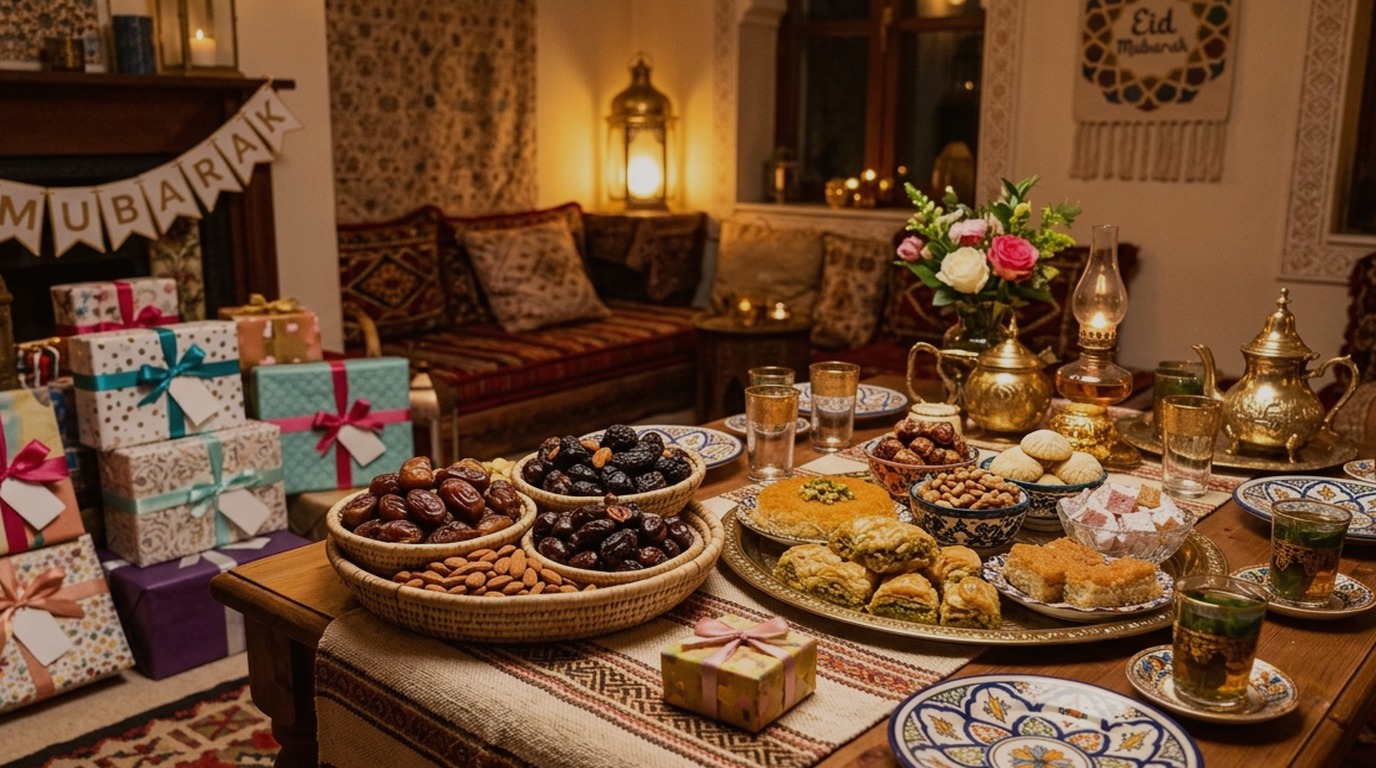
Eid al-Fitr Traditions: Customs, Sunnah and How Muslims Celebrate Eid
Scholar Verified
Written by: M. Hamza
Researcher: Ayesha Rahman
Reviewed by: Omar Abdullah
Last Review: 9 September 2026
Our Ramadan information is carefully examined by a qualified Islamic reviewer to help ensure that religious details, references, and guidance are presented accurately and responsibly.
Eid al-Fitr is a time of joy, gratitude, and community. While the core of the celebration is the same everywhere—a day of prayer, feasting, and charity—the way it's celebrated is wonderfully diverse.
Here is a look at the beautiful traditions that make Eid so special around the world.
The Universal Sunnahs of Eid
Before the unique cultural celebrations begin, there are certain recommended practices, or Sunnahs, that Muslims worldwide follow to start the day right.
- Wake Up Early and Take a Bath (Ghusl): The day begins early with a full bath for spiritual and physical purification.
- Wear Your Best Clothes: It's a day of celebration, so dressing in one's finest or new clothes is encouraged.
- Eat Something Sweet Before the Prayer: Unlike Eid al-Adha, it's a sunnah to eat before heading out for the Eid prayer on Eid al-Fitr. It is recommended to eat an odd number of dates.
- Recite the Takbir: This is the beautiful chant of Allahu Akbar (God is the Greatest), recited on the way to the prayer ground.
- Give Zakat al-Fitr: This mandatory charity must be given before the Eid prayer to ensure the less fortunate can also celebrate.
- Go to Prayer and Return Via a Different Route: Walking to the prayer ground (if possible) is a Sunnah, as is taking a different route back home to greet more people.
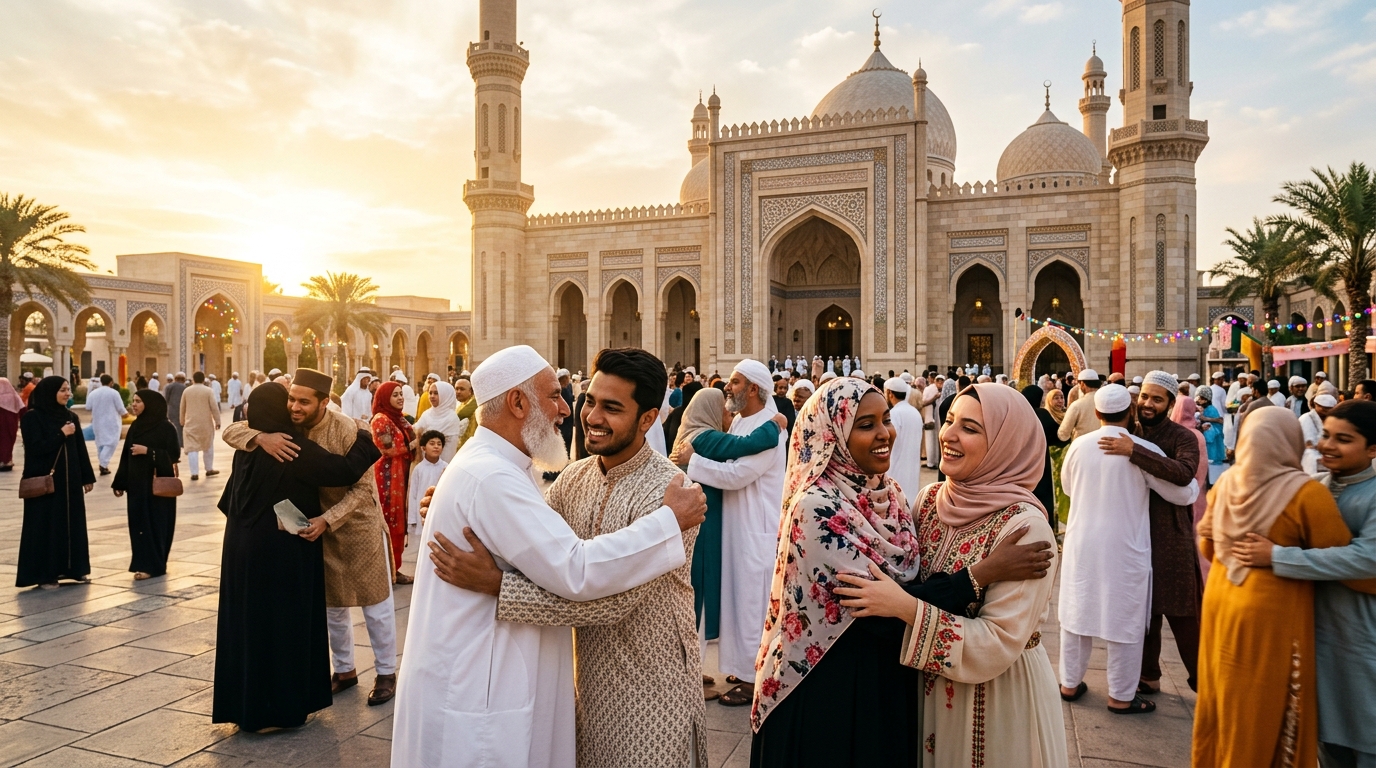
Common Eid al-Fitr traditions include:
- Giving Zakat al-Fitr before the Eid prayer
- Taking a bath and wearing clean or new clothes
- Reciting Eid Takbeer
- Eating dates or food before Eid prayer
- Performing the Eid Salah
- Listening to the Eid khutbah
- Saying “Eid Mubarak” to family and friends
- Visiting relatives and neighbours
- Sharing traditional Eid meals
- Giving children gifts or Eidi
- Helping poor and needy people
- Spending quality time with family
A World of Eid Celebrations
After the prayer, the celebrations begin! Muslim communities across the globe have woven their own rich cultural traditions into this special day.
South Africa: The "Moon Watchers"
In a beautiful tradition that honors the sighting of the new moon, South African "moon watchers" (or maan kykers) stand atop Signal Hill in Cape Town to declare the start of Eid after seeing the crescent moon with their own eyes.
Turkey: The "Sugar Festival"
Known as Şeker Bayramı, or the "Sugar Festival," Eid in Turkey is all about sweetness. Families visit each other, and guests are always offered traditional sweets like baklava and Turkish delight (lokum).
Indonesia & Malaysia: The Great Homecoming (Mudik)
As the world's largest Muslim-majority country, Indonesia sees one of the world's largest annual migrations, known as Mudik. People travel back to their hometowns to celebrate Eid with their extended families. The day is also marked by the tradition of Halal Bihalal, a time for seeking mutual forgiveness. Traditional dishes like ketupat (rice cakes) and rendang (spicy beef stew) are central to the feast.
Egypt: Kahk and Family Feasts
In Egypt, Eid is synonymous with Kahk, a special powdered-sugar cookie filled with dates, nuts, or honey. Families gather days in advance to bake these treats. The celebration often includes a large family lunch, traditionally featuring dishes like salted fish, rice, and salads.
Afghanistan: The Egg Fight (Tokhm-Jangi)
A wonderfully unique tradition in Afghanistan is Tokhm-Jangi, which translates to "egg war." People paint hard-boiled eggs and then engage in playful fights, tapping their eggs against others' to see whose cracks first.
South Asia (India, Pakistan, Bangladesh): Mehndi and Sweet Vermicelli
In countries like India and Pakistan, Eid is a colorful affair. Women and girls often decorate their hands with intricate mehndi (henna) patterns. A quintessential part of the feast is Seviyan (or Sheer Khurma), a sweet and creamy vermicelli pudding made with milk and dates.
A Beautiful Tradition of Giving
Across all these diverse cultures, a few common threads tie the celebrations together.
- Eidiya (Eid Gifts/Money): A beloved tradition for children is receiving gifts or money, known as Eidiya, from parents and elders.
- Visiting Graves: In many countries, including Turkey and Indonesia, families visit the graves of their departed loved ones to pray for them and honor their memory.
- The Eid Greeting: The most common greeting is "Eid Mubarak," which means "Blessed Eid." Another traditional greeting is "Taqabbalallahu minna wa minkum," which is a prayer meaning "May Allah accept (good deeds) from us and from you".
Eid al-Fitr is a day of joy, togetherness, and gratitude. Whether you are enjoying traditional sweets, visiting family, or taking part in a unique local custom, the spirit of the day is one of unity and celebration.
Ramadan Calendar 360 — Your complete guide to Ramadan, Eid, and Islamic worship. Visit us at ramadancalendar360.org for prayer times, calendars, and more.