What Is Eid Prayer and How to Pray It
Scholar Verified
Written by: M. Hamza
Researcher: Ayesha Rahman
Reviewed by: Omar Abdullah
Last Review: 9 September 2026
Our Ramadan information is carefully examined by a qualified Islamic reviewer to help ensure that religious details, references, and guidance are presented accurately and responsibly.
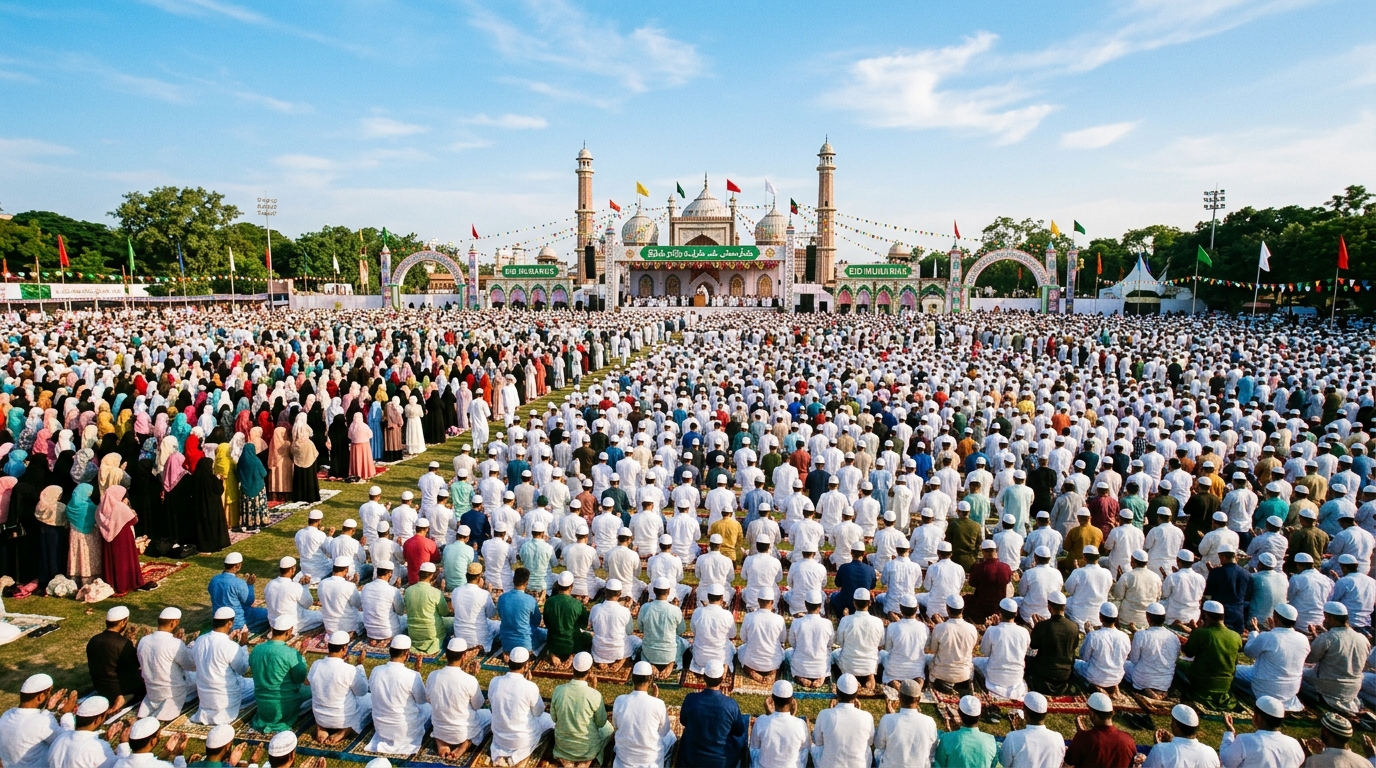
Eid prayer is a special congregational prayer performed on the morning of Eid al-Fitr and Eid al-Adha. It is a sunnah mu'akkadah — a strongly recommended practice of the Prophet Muhammad (peace be upon him).
The prayer consists of two rak'ahs (units) with additional takbirs (saying "Allahu Akbar") that make it different from regular prayers. It is performed in an open area or a large mosque, bringing the Muslim community together in celebration and gratitude.
When Is the Eid Prayer?
The Eid prayer takes place on the morning of Eid al-Fitr, after sunrise and before the sun reaches its zenith (around midday). The time begins approximately 15 to 20 minutes after sunrise and continues until just before the dhuhr (noon) prayer.
For Eid al-Fitr 2027, if the moon is sighted, Eid will be celebrated on Tuesday, March 9 or Wednesday, March 10, depending on your location.
How to Pray the Eid Prayer
The Eid prayer is simple to perform. Here is a step-by-step guide:
Step 1: Make the Intention (Niyyah)
Before beginning the prayer, make the intention in your heart:
"I intend to pray two rak'ahs of the Eid al-Fitr prayer, following the imam, for the sake of Allah."
Step 2: Begin with the First Takbir
Raise your hands to your ears and say:
Allahu Akbar
(Allah is the Greatest)
This is the opening takbir of the prayer.
Step 3: Recite the Opening Supplication (Du'a al-Istiftah)
After the first takbir, silently recite the opening supplication:
Subhanakallahumma wa bihamdika wa tabarakasmuka wa ta'ala jadduka wa la ilaha ghairuk
(Glory be to You, O Allah, and praise be to You, and blessed is Your name, and exalted is Your majesty, and there is no god besides You)
Step 4: Say Additional Takbirs
After the opening supplication, the imam will say Allahu Akbar three times. You should raise your hands to your ears and say Allahu Akbar with each one.
- First Takbir — after the opening supplication
- Second Takbir — after the first
- Third Takbir — after the second
Between each takbir, you should pause briefly and praise Allah quietly.
Step 5: Listen to the Imam's Recitation
After the third takbir, the imam will recite Surah Al-Fatihah and another surah aloud. You should listen attentively and say "Ameen" after the Fatihah.
Step 6: Complete the First Rak'ah
Perform ruku (bowing) and sujud (prostration) as in a normal prayer. The imam will say Allahu Akbar when moving to each position. Follow the imam in silence.
Step 7: Stand for the Second Rak'ah
After completing the first rak'ah, stand up for the second.
Step 8: Say Additional Takbirs in the Second Rak'ah
In the second rak'ah, the imam will say Allahu Akbar three times again. Raise your hands to your ears and say Allahu Akbar with each one.
Step 9: Listen to the Imam's Recitation
After the three takbirs, the imam will recite Surah Al-Fatihah and another surah aloud.
Step 10: Complete the Prayer
Complete the second rak'ah with ruku, sujud, and the final tashahhud. End the prayer with the tasleem — turning your head to the right and saying:
Assalamu alaykum wa rahmatullah
(Peace be upon you and the mercy of Allah)
Then turn to the left and say it again:
Assalamu alaykum wa rahmatullah
(Peace be upon you and the mercy of Allah)
The prayer is now complete.
Important Note: About the Takbirs Because there are legitimate differences in the details of Eid prayer, you should follow the imam rather than becoming concerned if your local mosque performs the additional takbirs differently.
After the Prayer: The Eid Sermon
After the prayer, the imam delivers a special sermon (khutbah). Unlike the Friday prayer, the Eid sermon comes after the prayer. You should remain seated and listen attentively.
Important Etiquette and Sunnahs
It is recommended to:
- Perform ghusl — Take a full bath before heading to the prayer
- Wear your best clothes — Dress in clean, beautiful clothes
- Apply perfume — Use pleasant fragrance (for men)
- Eat before the prayer — On Eid al-Fitr, it is sunnah to eat an odd number of dates or something sweet before leaving for the prayer
- Walk to the prayer ground — If possible, walk to the prayer location
- Use one route going and another coming back — The Prophet ﷺ would take different routes to and from the prayer ground
Who Should Attend the Eid Prayer?
The Eid prayer is recommended for all Muslims — men, women, and children. Women who are menstruating or experiencing postnatal bleeding are not required to perform the prayer, but they are still encouraged to attend the prayer ground and listen to the sermon.
What If You Miss the Eid Prayer?
If you miss the Eid prayer with the congregation, you may still pray it individually. You would pray two rak'ahs as you would with the congregation, but without the additional takbirs.
Zakat al-Fitr
Before the Eid prayer, all Muslims are required to pay Zakat al-Fitr. This is a small charity given to the poor. It must be paid before the Eid prayer so that the needy can also celebrate.
Eid Greetings
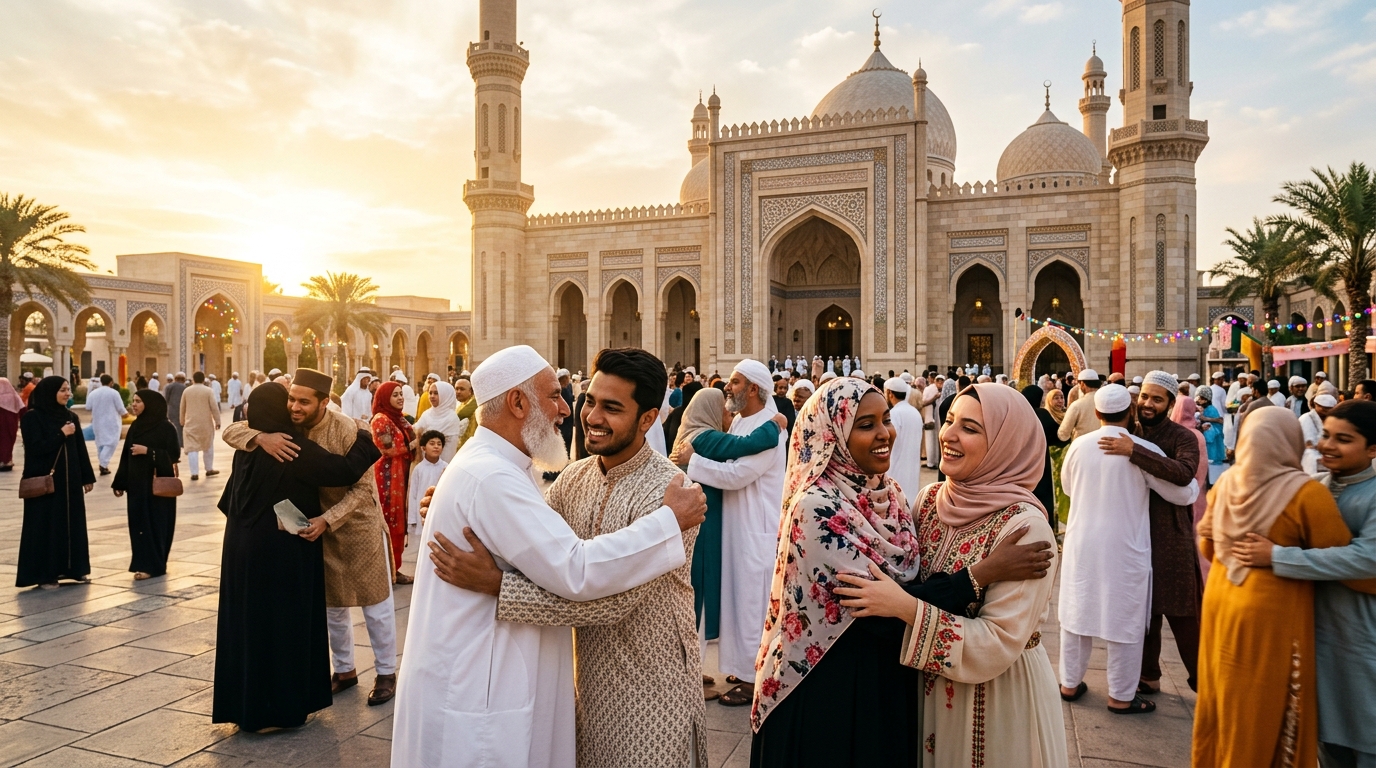
After the prayer, Muslims greet each other with:
Summary
Eid Prayer Summary:
| Aspect | Details |
|---|---|
| Number of Rak'ahs | 2 |
| Takbirs | 7 total (3 in first rak'ah after Fatihah, 3 in second, plus opening takbir) |
| Recitation | Imam recites aloud |
| Sermon | After the prayer |
| Time | After sunrise until just before dhuhr |
| Location | Open prayer ground or mosque |
Eid al-Fitr 2027 is expected on Tuesday, March 9 or Wednesday, March 10, depending on moon sighting. Check with your local mosque for the confirmed date.
Ramadan Calendar 360 — Your complete guide to Ramadan, Eid, and Islamic worship. Visit us at ramadancalendar360.org for prayer times, calendars, and more.