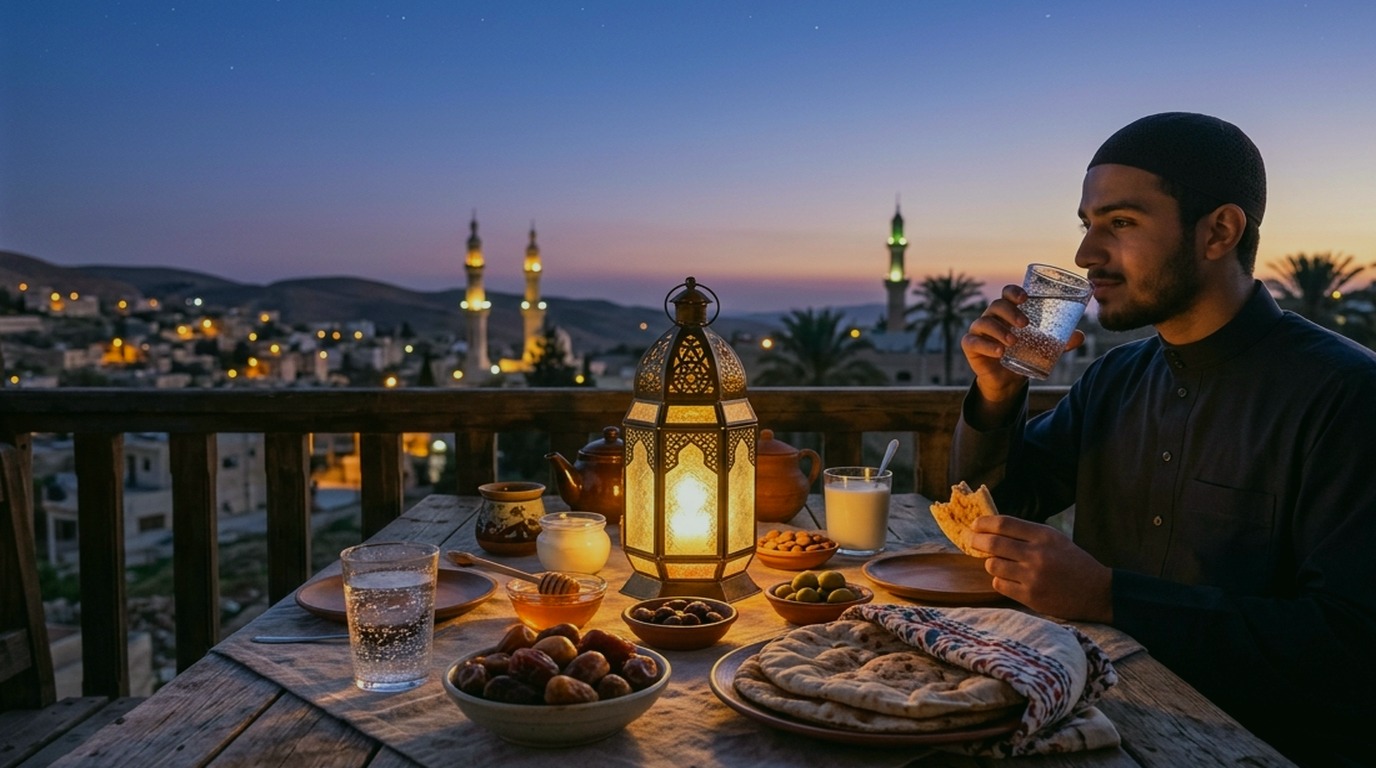
What to Eat for Sehri: Best Foods for Sehri
Scholar Verified
Written by: M. Hamza
Researcher: Ayesha Rahman
Reviewed by: Omar Abdullah
Last Review: 9 September 2026
Our Ramadan information is carefully examined by a qualified Islamic reviewer to help ensure that religious details, references, and guidance are presented accurately and responsibly.
Sehri is not just any meal—it is a meal infused with divine blessing (barakah). The Prophet Muhammad ﷺ said:
"Take Sehri, for indeed there is barakah (blessing) in it." (Sahih Bukhari, 1923; Sahih Muslim, 1095)
The Qur'an also provides the divine permission for this meal:
"كُلُوا وَاشْرَبُوا حَتَّى يَتَبَيَّنَ لَكُمُ الْخَيْطُ الْأَبْيَضُ مِنَ الْخَيْطِ الْأَسْوَدِ مِنَ الْفَجْرِ"
"Eat and drink until the white thread of dawn becomes distinct to you from the black thread [of night]."
(Surah Al-Baqarah, 2:187)
Choosing the right foods for Sehri is essential—both for sustaining the body through the long hours of fasting and for maximizing the spiritual blessings of this blessed meal.
The Sunnah Foods: What the Prophet ﷺ Recommended
1. Dates — The Best Suhoor
The Prophet ﷺ specifically praised dates for Suhoor:
"The best pre-fasting meal for the believer is dates."
"How excellent are dates as the believer's Suhoor!"
Dates are naturally rich in:
- Natural sugars for quick energy
- Fiber for slow digestion
- Potassium and magnesium to prevent muscle cramps
- Essential minerals that support hydration
If fresh dates are not available, dry dates are also excellent. And if no dates are available at all, even a few mouthfuls of water suffice to attain the blessing of Suhoor.
2. Water — The Purifying Drink
The Prophet ﷺ said:
"The pre-dawn meal is blessed, so do not neglect it even if you only take a sip of water. Verily, Allah and the angels pray for those who have pre-dawn meals." (Ahmad)
Even a simple sip of water fulfills the Sunnah of Suhoor and brings divine blessings.
Best Foods for Sustained Energy
Nutrition experts recommend slow-releasing energy foods that sustain you through the fasting hours:
Complex Carbohydrates (Long-lasting Energy)
- Oats — high in fiber, stabilizes blood sugar
- Whole wheat bread — provides sustained energy
- Brown rice — slow-digesting carbohydrate
- Barley — keeps you full longer
- Legumes — chickpeas, beans, yellow lentils
"These include grains and seeds like barley, wheat, oats, millets, semolina, beans, lentils, whole wheat flour and unpolished rice."
Proteins (Muscle Support & Fullness)
- Eggs — excellent protein source
- Yogurt — contains beneficial probiotics
- Cheese — provides sustained protein
- Lentils and beans — plant-based protein
- Milk — hydrating and nutritious
"It takes the body 7-9 hours to digest these types of foods, and thus one's hunger would be delayed."
Healthy Fats (Satiety)
- Nuts — almonds, walnuts, cashews
- Avocado — healthy monounsaturated fats
- Olive oil — heart-healthy fat
Hydrating Foods
- Cucumbers — high water content
- Lettuce — maintains fluids for longer periods
- Bananas — fiber and potassium
- Water-rich fruits — oranges, watermelon
- Milk and fruit smoothies — hydration and nutrition
"Eating fresh foods, especially fruits and vegetables, drinking juice, milk, and eating salads, help one to have a good healthy pre-dawn meal and endure a day of fasting."
Honey — The Prophetic Sweetener
"Eating a spoon of honey in the pre-dawn meal helps to gradually raise the blood sugar level, sustain a fast, and be energetic during the day."
Quick Sehri Meal Ideas
Oatmeal with nuts, honey, and sliced bananas + a glass of milk
Whole wheat bread with labneh/cheese, cucumber slices, and olives + water
Eggs (boiled or scrambled) with whole grain toast + fresh fruit
Yogurt with dates, nuts, and honey + water
Beans with olive oil, served with whole wheat bread + salad
Lentil soup with whole grain bread + fresh vegetables
The Prophetic Way: Light but Blessed
The Prophet ﷺ kept his Sehri light. A narration describes that he was brought dates and water for his pre-dawn meal. The Sunnah is not about eating large quantities but about partaking in the blessed meal, even if it's just a date or a sip of water.
"The sunnah of suhoor would be fulfilled by eating a small or large quantity of food, or even just by drinking a sip of water."
Practical Tips for a Better Sehri
- Eat Sehri closer to the end of its time window rather than very early, so the gap before the fasting day feels shorter.
- Don't skip Sehri to sleep longer. Even a small meal carries more benefits than none at all.
- Prioritise water over food volume if you're short on appetite early in the morning.
- Avoid overeating. A heavy, oversized meal can leave you feeling sluggish rather than energised.
Frequently Asked Questions
It's not obligatory for the fast to be valid, but it's a strongly encouraged Sunnah, and skipping it means missing out on the blessing mentioned in the Hadith.
Plain water is the most reliable choice for hydration. Milk and natural fruit-based smoothies are also good options.
No. A balanced, moderate meal with slow-digesting foods works better than a large meal, which can leave you feeling heavy rather than energised.
Yes, both for their steady energy release and their significance in the Sunnah, as reflected in the hadith above.
Ramadan Calendar 360 — Your complete guide to Ramadan, Eid, and Islamic worship. Visit us at Ramadan Calendar 360 for prayer times, Ramadan calendars, and more.