What Is Eid al-Fitr?
Scholar Verified
Written by: M. Hamza
Researcher: Ayesha Rahman
Reviewed by: Omar Abdullah
Last Review: 9 September 2026
Our Ramadan information is carefully examined by a qualified Islamic reviewer to help ensure that religious details, references, and guidance are presented accurately and responsibly.
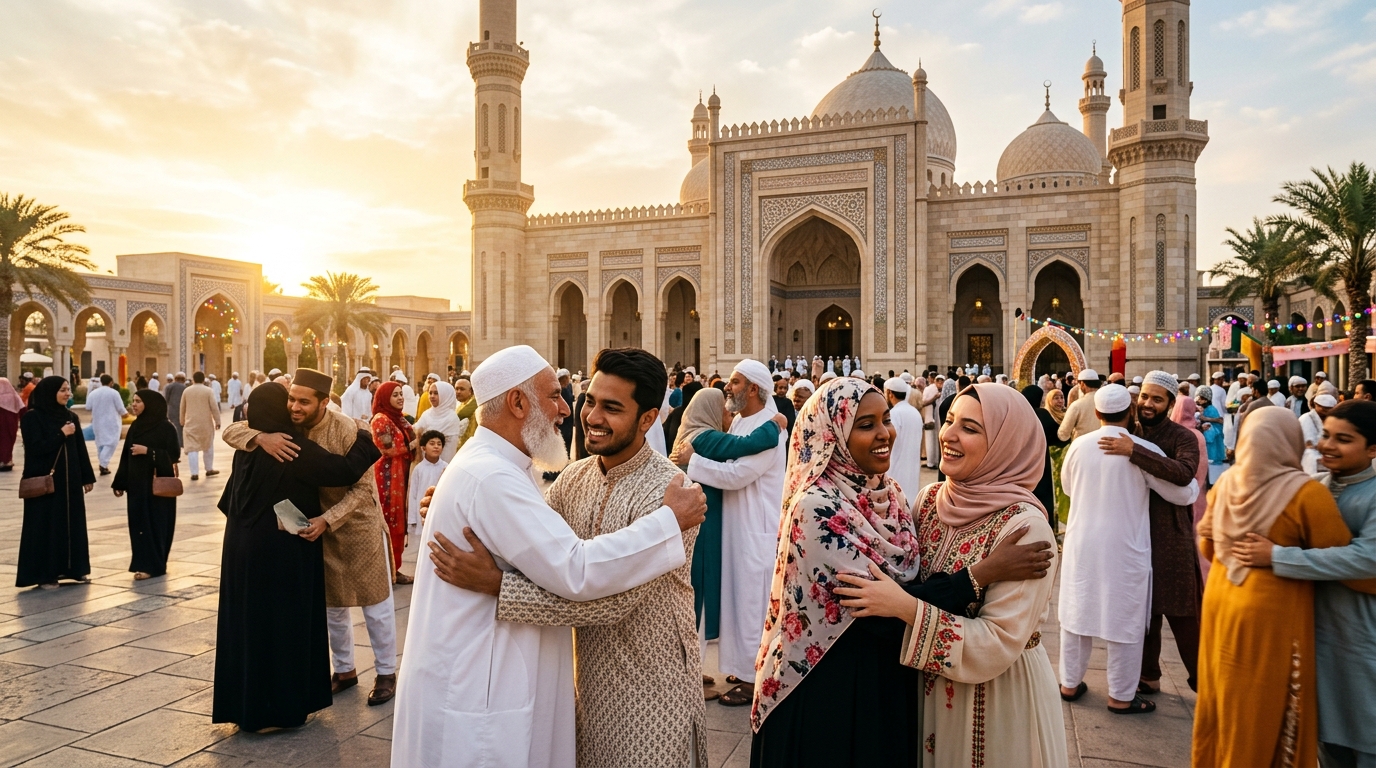
Eid al-Fitr (عيد الفطر) is one of the two major Islamic festivals celebrated by Muslims around the world. It marks the end of Ramadan, the Islamic month of fasting, worship, reflection, and charity.
Eid al-Fitr begins when the month of Shawwal starts after Ramadan has ended. Muslims celebrate the day by performing the Eid prayer, giving Zakat al-Fitr, thanking Allah for the opportunity to complete Ramadan, spending time with family and friends, and helping people in need.
The date of Eid al-Fitr changes every year because the Islamic calendar follows the lunar cycle.
What Does Eid al-Fitr Mean?
The Arabic word Eid means a recurring festival or celebration, while Fitr is connected with breaking the fast.
Therefore, Eid al-Fitr can be understood as the festival marking the breaking of the Ramadan fast.
It is a day of gratitude and celebration after completing a month of fasting and worship. However, Eid is not simply a cultural celebration. It is also an important religious occasion with its own prayers, charity, manners, and traditions.
When Is Eid al-Fitr Celebrated?
Eid al-Fitr is celebrated on 1 Shawwal, the first day of the Islamic month of Shawwal.
Ramadan lasts for either 29 or 30 days, depending on the sighting of the new crescent and the applicable Islamic calendar method.
This means Eid al-Fitr can occur approximately 29 or 30 days after the beginning of Ramadan.
The exact date can differ between countries and communities because authorities may follow different methods for determining the beginning of Shawwal.
How Is the Date of Eid Determined?
Traditionally, the beginning of Shawwal is determined through the sighting of the new crescent moon (hilal) after Ramadan.
If the crescent is not sighted, Ramadan may complete 30 days.
For this reason, Muslims should follow the announcement of their local mosque, Islamic authority, or recognized moon-sighting organization.
Why Do Muslims Celebrate Eid al-Fitr?
Eid al-Fitr is a celebration of gratitude to Allah after completing Ramadan.
During Ramadan, Muslims fast from dawn until sunset, increase their prayers, recite the Quran, give charity, and try to improve their character and relationship with Allah.
Eid provides an opportunity to:
- Thank Allah for completing Ramadan
- Celebrate with family and the Muslim community
- Perform the Eid prayer
- Give Zakat al-Fitr
- Help people in need
- Strengthen family relationships
- Visit relatives and friends
- Forgive and reconcile with others
- Share food and happiness
The celebration is therefore connected to both worship and community.
Is Eid al-Fitr Mentioned in the Quran?
The Quran does not provide a detailed description of Eid al-Fitr as a festival.
However, verses concerning Ramadan, fasting, completing the prescribed period, and glorifying Allah are connected with the end of Ramadan.
Allah says in Surah Al-Baqarah 2:185:
"...and to glorify Allah for that [to] which He has guided you; and perhaps you will be grateful."
The specific practices of Eid, including the Eid prayer and Zakat al-Fitr, are established through the Sunnah of Prophet Muhammad ﷺ.
What Is the History of Eid al-Fitr?
Eid al-Fitr is one of the two annual Islamic celebrations established in Islam.
Anas ibn Malik (RA) narrated that when the Prophet Muhammad ﷺ arrived in Madinah, the people had two days on which they played and entertained themselves. The Prophet ﷺ explained that Allah had replaced those days with two better days: Eid al-Fitr and Eid al-Adha.
This narration is recorded in Sunan Abi Dawud.
Since then, Muslims have observed Eid al-Fitr as a religious festival marking the completion of Ramadan.
What Is Zakat al-Fitr on Eid?
Zakat al-Fitr, also known as Sadaqat al-Fitr or Fitrana, is an obligatory charity associated with the end of Ramadan for Muslims who meet the applicable conditions.
It is intended to help eligible needy people and is traditionally given in the form of a prescribed amount of staple food.
The Prophet ﷺ instructed Muslims to give Zakat al-Fitr before people went out for the Eid prayer.
When Should Zakat al-Fitr Be Paid?
Zakat al-Fitr should ideally reach eligible recipients before the Eid prayer.
It may also be distributed earlier according to the applicable Islamic ruling. Reports from the Companions indicate that it was given one or two days before Eid.
The exact rules regarding timing, amount, and whether monetary payment is acceptable can differ between schools of Islamic jurisprudence.
What Is the Eid Prayer?
The Eid prayer (Salat al-Eid) is a special congregational prayer performed on the morning of Eid.
Muslims gather in large numbers at:
- Mosques
- Eid prayer grounds
- Islamic centers
- Other designated prayer areas
The prayer is normally followed by a khutbah (sermon).
The exact number and arrangement of additional takbirs in the Eid prayer can differ according to Islamic school of jurisprudence.
When Is the Eid Prayer Performed?
The Eid prayer is performed after sunrise, once the time for the prayer has entered, and before midday.
The exact local prayer time varies according to the location and date.
Muslims should check their local mosque or Islamic center for the precise Eid prayer time.
What Should You Do on the Morning of Eid?
There are several recommended practices associated with Eid al-Fitr.
1. Perform Ghusl
Taking a bath or performing ghusl before going to the Eid prayer is among the recommended practices reported from the early Muslims.
2. Wear Clean or Good Clothing
Muslims are encouraged to wear clean and presentable clothing for Eid. This does not necessarily mean purchasing new clothes. Clean and suitable clothing is sufficient.
3. Eat Before the Eid Prayer
Unlike Eid al-Adha, it is recommended to eat before leaving for the Eid al-Fitr prayer. Anas ibn Malik (RA) reported that the Prophet ﷺ would not go out on Eid al-Fitr until he had eaten some dates.
4. Eat an Odd Number of Dates
The Sunnah specifically mentions eating dates before going to the Eid prayer, with an odd number reported in the narration. For people who do not have dates, eating another permissible breakfast is not a problem.
5. Perform the Eid Prayer
Muslims should attend the Eid prayer if they are able to do so.
6. Say the Takbir
Muslims recite the Takbir during the period leading up to Eid prayer. A commonly recited form includes:
Allahu Akbar, Allahu Akbar, La ilaha illallah, Allahu Akbar, Allahu Akbar, wa lillahil-hamd.
The exact wording can vary according to local practice.
7. Take a Different Route
It is reported that the Prophet ﷺ would take one route when going to the Eid prayer and another route when returning. This is a well-known Sunnah associated with Eid.
What Is Eid Takbir?
The Takbir of Eid is the declaration of Allah's greatness.
Muslims increase their recitation of "Allahu Akbar" around Eid as an expression of gratitude and worship.
For Eid al-Fitr, the Takbir begins after sunset on the final day of Ramadan according to the commonly followed practice and continues until the Eid prayer.
However, details about the exact beginning and ending of Takbir can vary according to scholarly opinion.
What Do Muslims Say to Each Other on Eid?
Muslims commonly congratulate each other by saying:
"Eid Mubarak."
This means approximately "Blessed Eid" or "Have a blessed Eid."
Other traditional greetings are also used in different Muslim communities and cultures. There is no requirement that everyone use one particular greeting.
Eid al-Fitr Traditions Around the World
Eid al-Fitr is celebrated differently across Muslim communities while maintaining its religious foundations. Common traditions include:
- Family gatherings
- Visiting relatives
- Sharing meals
- Giving children gifts
- Wearing traditional clothing
- Preparing special desserts
- Visiting friends
- Giving charity
- Decorating homes
- Calling family members who live far away
- Visiting cemeteries in some cultures
Cultural traditions can vary significantly from one country to another.
Eid Food and Meals
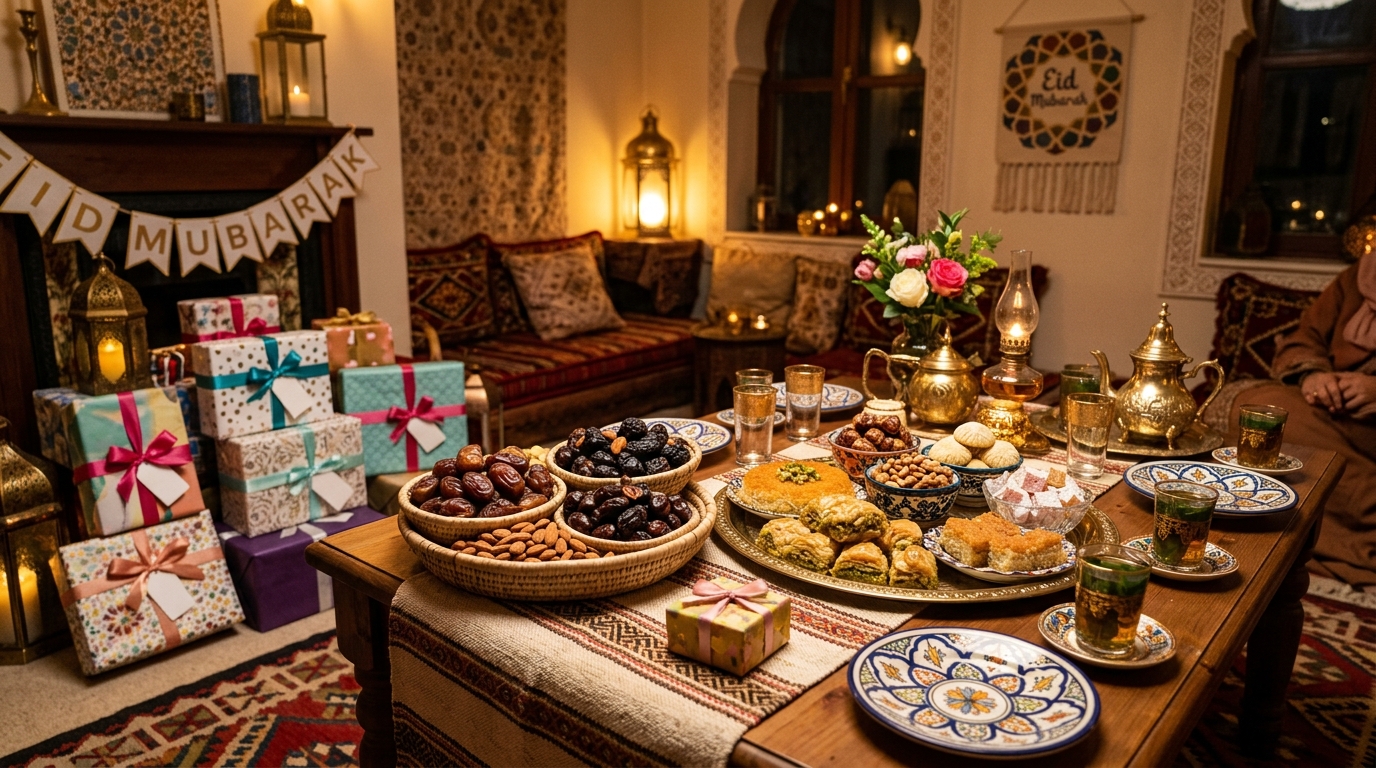
Food is an important part of Eid celebrations.
Families often prepare special meals and desserts that are associated with their local culture.
Popular Eid foods vary around the world and may include:
- Dates
- Rice dishes
- Meat dishes
- Sweets
- Cakes
- Biscuits
- Vermicelli desserts
- Traditional pastries
- Regional dishes
There is no single food that all Muslims must eat on Eid.
Giving Gifts on Eid
Giving gifts on Eid is a common cultural practice.
Parents may give children: Toys, Clothes, Books, Money, and Sweets.
Adults may also exchange gifts with family and friends.
Although gift-giving is not the defining religious requirement of Eid al-Fitr, giving gifts and showing kindness can strengthen relationships and create happiness.
Eid and Children
Eid is particularly exciting for children. Families may involve children in choosing Eid clothes, preparing food, attending Eid prayer, visiting relatives, receiving gifts, and giving charity.
Parents can also use Eid as an opportunity to teach children about gratitude, generosity, prayer, and helping others.
Is Fasting Allowed on Eid al-Fitr?
No.
Fasting on 1 Shawwal, the day of Eid al-Fitr, is prohibited.
Eid al-Fitr is specifically a day of celebration and eating after Ramadan. The Prophet ﷺ prohibited fasting on the two Eid days.
Therefore, Muslims should not observe a voluntary or Ramadan make-up fast on Eid al-Fitr itself. If someone has missed Ramadan fasts, those Qada fasts can be performed on appropriate days after Eid.
What Should You Avoid on Eid?
Eid is a time of happiness, but Muslims should continue to follow Islamic principles. Avoid:
- Missing obligatory prayers
- Wasteful spending & Excessive food waste
- Arguing with family & Backbiting
- Harmful entertainment or Unlawful activities
- Neglecting people who are in need
The end of Ramadan should not mean abandoning the good habits developed during the month.
Eid al-Fitr vs Eid al-Adha
Islam has two major annual Eid celebrations.
| Eid al-Fitr | Eid al-Adha |
|---|---|
| Celebrated on 1 Shawwal | Celebrated on 10 Dhul-Hijjah |
| Marks the end of Ramadan | Associated with Hajj and the sacrifice of Prophet Ibrahim (AS) |
| Comes after Ramadan fasting | Occurs during the Hajj period |
| Zakat al-Fitr is associated with it | Udhiyah/Qurbani is associated with it |
| Eating before Eid prayer is recommended | Delaying eating until after Eid prayer is recommended |
| It is not a day for fasting | Fasting is also prohibited on Eid al-Adha |
Both are important Islamic celebrations established by the Sunnah.
How Long Does Eid al-Fitr Last?
The religious festival of Eid al-Fitr is associated with 1 Shawwal.
However, many Muslim cultures continue family gatherings, visits, meals, and celebrations for several days.
The length of cultural celebrations varies from country to country.
Is Eid al-Fitr a Public Holiday?
Whether Eid al-Fitr is a public holiday depends on the country.
Many Muslim-majority countries provide public holidays around Eid, while Muslim communities in other countries may receive different arrangements from employers, schools, or institutions.
The religious date remains based on the Islamic calendar regardless of whether it is officially recognized as a public holiday.
What Is the Importance of Eid al-Fitr?
Eid al-Fitr has spiritual, social, and charitable importance.
Spiritual Importance
It marks the completion of Ramadan and encourages Muslims to thank Allah for the opportunity to fast and worship.
Charitable Importance
Zakat al-Fitr helps eligible people in need participate in Eid.
Family Importance
Eid encourages Muslims to maintain family relationships and visit relatives and friends.
Community & Personal Importance
Large Eid prayers bring Muslims together. Eid provides an opportunity to reflect on the lessons learned during Ramadan and continue good habits.
How to Celebrate Eid al-Fitr According to the Sunnah
A simple Sunnah-focused Eid routine can include:
- Complete Ramadan.
- Give Zakat al-Fitr within the required time.
- Perform ghusl and wear clean clothing.
- Eat before leaving for Eid prayer.
- Recite the Eid Takbir.
- Attend the Eid prayer.
- Listen to the khutbah.
- Greet other Muslims.
- Visit family and friends.
- Give gifts and charity.
- Avoid prohibited activities.
- Continue the good habits developed during Ramadan.
Final Thoughts
Eid al-Fitr is more than a day of celebration. It is the culmination of Ramadan and an opportunity for Muslims to express gratitude to Allah, worship together, help those in need, strengthen family relationships, and carry the lessons of Ramadan into the rest of the year.
The most important parts of Eid include Zakat al-Fitr, Eid prayer, Takbir, gratitude, charity, family ties, and responsible celebration.
While food, clothing, gifts, and cultural traditions make Eid enjoyable, Muslims should remember the spiritual purpose of the occasion and ensure that celebrations remain consistent with Islamic teachings.
Ramadan Calendar 360 — Your complete guide to Ramadan, Eid, and Islamic worship. Visit us at Ramadan Calendar 360 for prayer times, Ramadan calendars, and more.