Eid Takbeer (Eid ul-Fitr)
Scholar Verified
Written by: M. Hamza
Researcher: Ayesha Rahman
Reviewed by: Omar Abdullah
Last Review: 9 September 2026
Our Ramadan information is carefully examined by a qualified Islamic reviewer to help ensure that religious details, references, and guidance are presented accurately and responsibly.
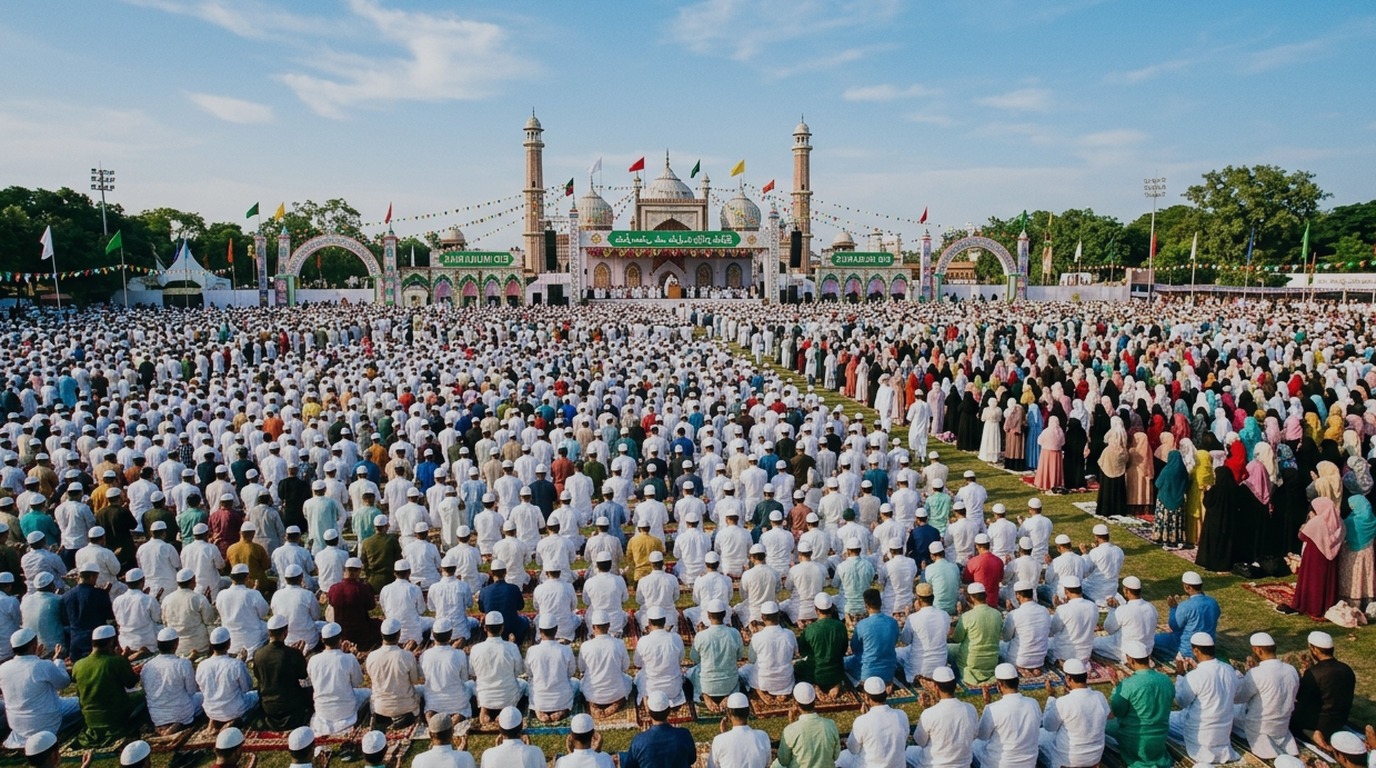
Eid takbeer is the special "Allahu Akbar" you recite on Eid ul-Fitr to praise Allah and celebrate the end of Ramadan. It starts after you see (or hear the announcement of) the Shawwal crescent and continues until the Eid prayer begins.
The Words of Eid Takbeer
The most common and authentic form of the Takbeer is as follows:
اللَهُ أَكْبَرُ، اللَهُ أَكْبَرُ، اللَهُ أَكْبَرُ لَا إِلَهَ إِلَّا اللَهُ، اللَهُ أَكْبَرُ اللَهُ أَكْبَرُ وَلِلَّهِ الْحَمْدُ
Transliteration: Allahu Akbar, Allahu Akbar, Allahu Akbar, La ilaha illa Allah, Allahu Akbar, Allahu Akbar, wa lillahil hamd
English Meaning: Allah is the Greatest, Allah is the Greatest, Allah is the Greatest. There is no god but Allah. Allah is the Greatest, Allah is the Greatest, and all praise belongs to Allah.
You may also hear it recited with "Allahu Akbar" repeated three times at the beginning and again later in the chant, which is also permissible.
Why Do We Recite It?
The command to recite the Takbeer comes directly from the Quran. After mentioning the fast of Ramadan, Allah says:
"He wants you to complete the prescribed period and to glorify Him (do takbeer) for having guided you, so that you may be thankful."
— Surah Al-Baqarah (2:185)
When to say Eid Takbeer
- Eid ul-Fitr takbeer time: From the night you confirm Eid (after sunset on the last day of Ramadan) until the imam starts the Eid prayer the next morning.
- Many people also recite it on the way to the mosque, while waiting for the prayer, and quietly before the extra takbirs in the Eid salah.
Why it matters
Eid takbeer is a way of:
- Thanking Allah for helping you complete Ramadan.
- Showing joy and gratitude as a community.
- Reminding yourself that every blessing comes from Allah alone.
The Prophet ﷺ used to come out on Eid and begin with the prayer, and the Companions would recite takbeer loudly on their way to the Eidgah, filling the air with "Allahu Akbar." This practice has been passed down through generations and is still one of the most beautiful sounds of Eid morning.
“And [He wants] for you to complete the period [of fasting] and to glorify Allah for that [to] which He has guided you, and perhaps you will be grateful.”
— Surah Al-Baqarah 2:185
This verse is often quoted by scholars when explaining the importance of takbeer on Eid, as "glorifying Allah" includes saying "Allahu Akbar" and thanking Him for guiding you through Ramadan.
The Full Takbeer
Some communities, like in Egypt and other parts of the world, recite a longer, more detailed version of the Takbeer that has been passed down through generations.
اللَّهُ أَكْبَرُ كَبِيرًا وَالْحَمْدُ لِلَّهِ كَثِيرًا وَسُبْحَانَ اللَّهِ بُكْرَةً وَأَصِيلًا لَا إِلَهَ إِلَّا اللَّهُ وَحْدَهُ صَدَقَ وَعْدَهُ وَنَصَرَ عَبْدَهُ وَأَعَزَّ جُنْدَهُ وَهَزَمَ الْأَحْزَابَ وَحْدَهُ لَا إِلَهَ إِلَّا اللَّهُ وَلَا نَعْبُدُ إِلَّا إِيَّاهُ مُخْلِصِينَ لَهُ الدِّينَ وَلَوْ كَرِهَ الْكَافِرُونَ
Allah is the Greatest in all greatness, and all praise is due to Allah in abundance. Glory be to Allah, in the morning and in the evening. There is no god but Allah alone. He fulfilled His promise, gave victory to His servant, honored His forces, and He alone defeated the confederates. There is no god but Allah, and we worship none but Him, sincere in our devotion even though the disbelievers hate it
Simple tips for families
- Teach children the short takbeer phrase and encourage them to say it on the way to the mosque.
- Play a soft recording at home so everyone can learn the words before Eid day.
- Make it a habit: say takbeer after Fajr, while getting ready, and while walking to the prayer.
Should Eid Takbeer Be Recited Out Loud?
Eid Takbeer is commonly recited aloud as part of the public expression of Eid. Men traditionally raise their voices with Takbeer when appropriate, while women may also recite it without unnecessarily raising their voices.
Can Women Recite Eid Takbeer?
Yes. Women can recite Eid Takbeer. A report in Sahih al-Bukhari describes women attending the Eid gathering and reciting Takbeer along with the people while seeking Allah's blessings on that day. Women should follow the appropriate guidance of their local Islamic community concerning congregation arrangements and voice level.
Ramadan Calendar 360 — Your complete guide to Ramadan, Eid, and Islamic worship. Visit us at Ramadan Calendar 360 for prayer times, Ramadan calendars, and more.