What Is Zakat al-Fitr (Zakatul Fitar)? Complete Guide
Scholar Verified
Written by: M. Hamza
Researcher: Ayesha Rahman
Reviewed by: Omar Abdullah
Last Review: 9 September 2026
Our Ramadan information is carefully examined by a qualified Islamic reviewer to help ensure that religious details, references, and guidance are presented accurately and responsibly.
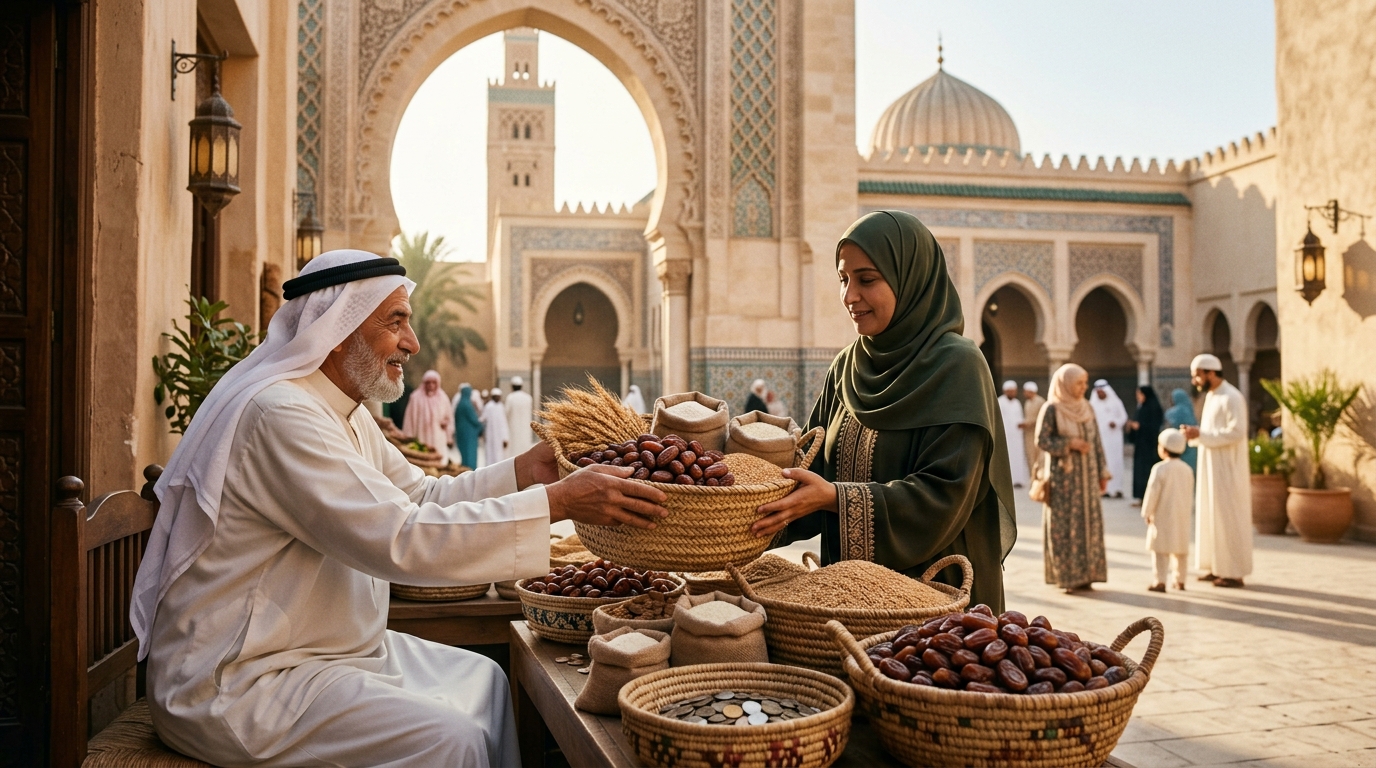
The term "Zakat al-Fitr," sometimes referred to as "Zakatul Fitr" or "Fitrana," is a minor compulsory act of giving for every Muslim who has the means to do so before offering prayers on the day of Eid al-Fitr at the end of the month of Ramadan. This signifies the completion of the month of Ramadan and ensures that the poor people are able to celebrate the festival as well.
"The Prophet made it incumbent on all the slave or free Muslims, male or female, to pay one Sa' of dates or barley as Zakat al-Fitr."
— Sahih al-Bukhari
Ibn Abbas (may Allah be pleased with him) narrated:
"The Messenger of Allah (peace be upon him) enjoined Zakat al-Fitr as a purification for the fasting person from idle talk and obscenities, and as food for the poor."
The Meaning Behind It
"Fitr" comes from the same root as "iftar," the meal that breaks the fast. Zakat al-Fitr is tied to that breaking—it's a charity of breaking the fast, given once a year at the end of Ramadan, not throughout the year like regular Zakat.
Why It Was Made Obligatory
There are two reasons why the Prophet Muhammad ﷺ enjoined Zakat al-Fitr; one is for the purification of the fasting person from any evil utterance or mistake he might have committed in the month of Ramadan, while the second reason is for providing food for the poor so that they may also celebrate Eid without begging from anyone.
Who Must Pay It
Every Muslim who has food beyond their own needs and their family's needs for the day of Eid must pay Zakat al-Fitr. The household head pays on behalf of:
- Themselves
- Their spouse
- Their children, including newborns born before Eid prayer
- Any other dependents living in the home
It doesn't matter if a person is otherwise too poor to pay regular Zakat—as long as they have enough food for that one day, they still owe Zakat al-Fitr.
When It's Due
Zakat al-Fitr must be paid before the Eid al-Fitr prayer starts. Scholars agree it can be paid any time from the start of Ramadan, but most Muslims pay it in the final two or three days so it reaches the poor in time for Eid shopping and cooking. Paying it after the Eid prayer still counts as charity, but it no longer counts as Zakat al-Fitr — that reward is missed.
How Much Is Zakat al-Fitr?
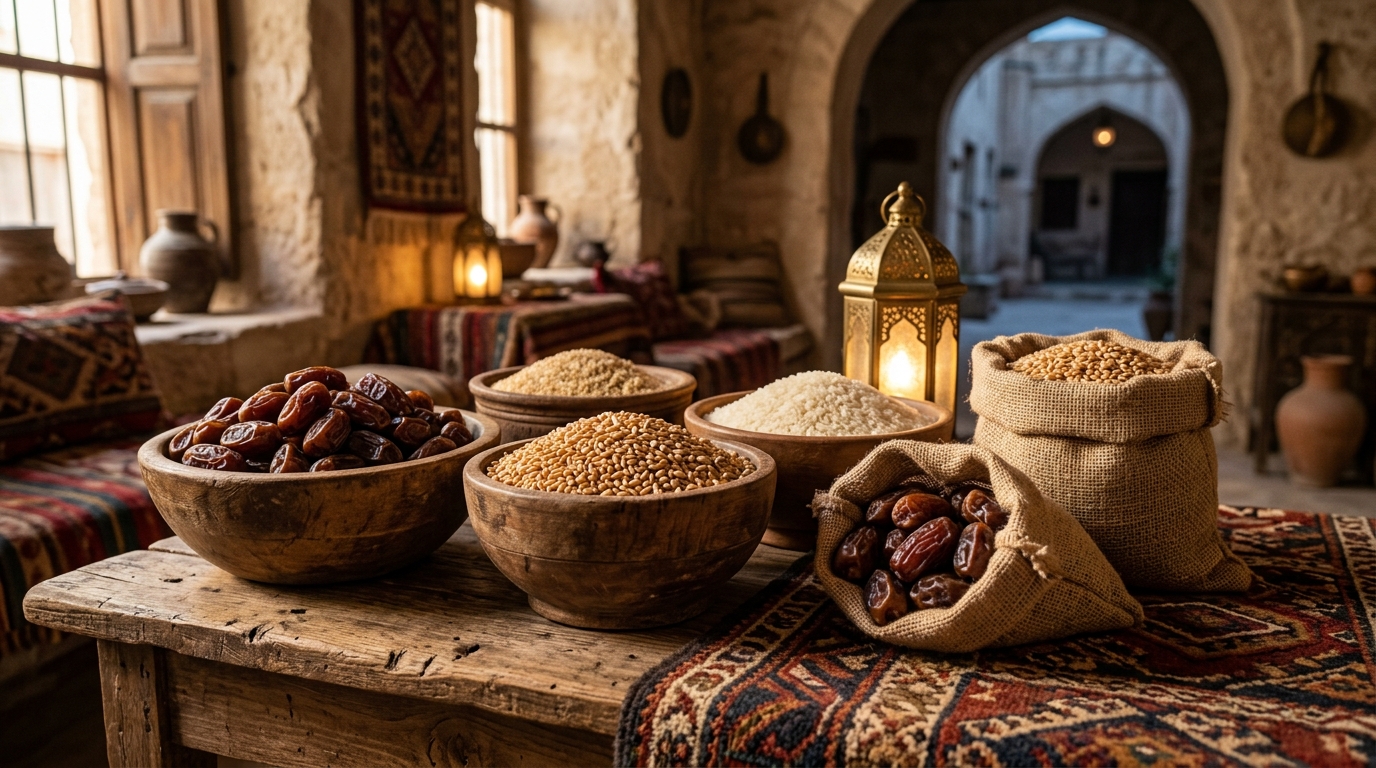
The traditional amount is one sa'—roughly 2 to 3 kg—of a staple food such as wheat, barley, dates, or rice, given per person. Most Muslims today pay the cash equivalent instead, since it's easier to distribute and lets recipients buy what they actually need. The cash value is usually announced each year by local mosques or national Islamic organizations, since it depends on local food prices.
The amount is fixed by Islamic law. It is one sack of staple food.
What Is One Sa'?
One "sa" is an ancient measurement. It is approximately 2.5 to 3 kilograms. In practice:
- Approximately 2.5 kg of wheat or flour
- Approximately 3 kg of rice
What Food Should You Give?
The Prophet (peace be upon him) listed specific foods:
- Dates (one Sa')
- Barley (one Sa')
- Wheat (half a Sa' in the Hanafi school)
- Raisins (one Sa')
- Rice (in regions where it is the staple food)
The food you give should be the common staple food of your country. In Singapore, rice is the staple. In Jordan, it's wheat.
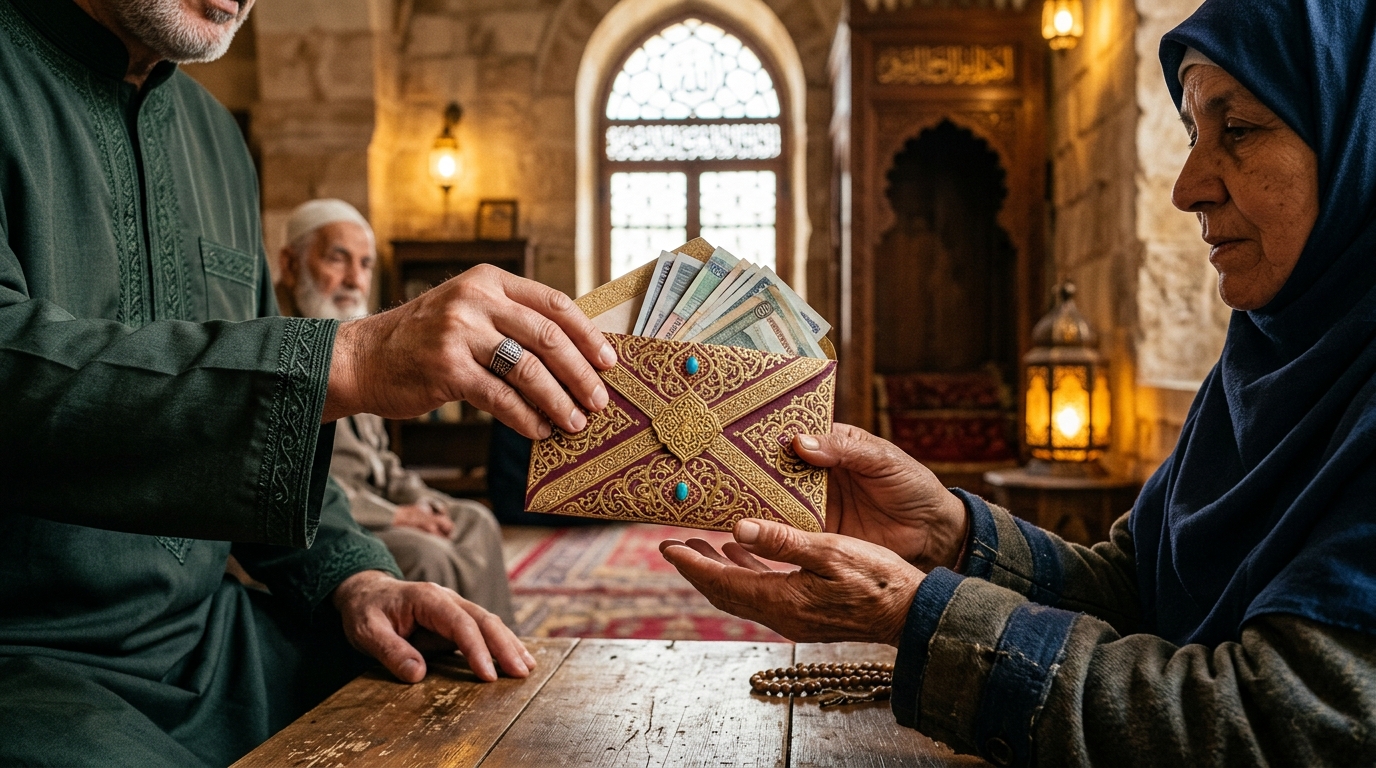
Many scholars allow you to pay the cash equivalent of the food. This is common practice today.
How Much in Cash?
The cash amount varies by country and year. Here are some examples:
| Country | 2026 Amount (per person) |
|---|---|
| Singapore | S$5.00 (normal) or S$8.00 (higher) |
| Pakistan | Rs 300 (minimum) |
| Jordan | 1800 Fils (approx) |
| France | €7 |
Important: These amounts change every year. Always check the current rate in your country before Eid.
Who Receives Zakat al-Fitr?
The recipients of Zakat al-Fitr are the same as those for regular zakat. The Quran lists eight categories:
- The poor (Al-Fuqara)
- The needy (Al-Masakeen)
- Those employed to collect zakat
- Those whose hearts are to be reconciled
- Those in bondage
- Those in debt
- In the cause of Allah
- The stranded traveler
The Prophet specifically emphasized giving to the poor. He said:
"Make them (the poor) self-sufficient on this day (of Eid)."
Common Mistakes to Avoid
- Paying it too late. Once Eid prayer starts, the special reward is gone.
- Forgetting dependents. Every family member counts, including young children.
- Underpaying the amount. Using an outdated or overly low cash value.
- Confusing it with Zakat. Zakat al-Fitr is a fixed, per-person amount — not 2.5% of savings.
Zakat al-Fitr vs. Zakat: The Difference
| Feature | Zakat al-Fitr | Zakat (al-Mal) |
|---|---|---|
| When | Once, before Eid al-Fitr | Once a year, any time |
| Who pays | Almost every Muslim | Only those above the nisab (wealth threshold) |
| Amount | Fixed, per person | 2.5% of savings and eligible wealth |
| Purpose | Purify the fast, feed the poor for Eid | Purify wealth, support the needy year-round |
Frequently Asked Questions About Zakat al-Fitr
What is Zakat al-Fitr?
Zakat al-Fitr is an obligatory charity associated with the end of Ramadan. It is given by Muslims who meet the relevant conditions, traditionally in the form of a prescribed amount of staple food, before Eid al-Fitr prayer.
Is Zakat al-Fitr compulsory?
Yes. It is generally considered obligatory for Muslims who meet the conditions established by Islamic law.
How much is Zakat al-Fitr per person?
The basic prophetic measure is one sa' of food per person. The weight in kilograms depends on the food because a "sa" is a volume measure. Some references use approximately 3 kg for rice, but the exact amount should follow the guidance used by your local Islamic authority.
Can I give Zakat al-Fitr in money?
There is a difference of scholarly opinion. Some scholars require food based on the prophetic texts, while other jurists permit monetary payment under certain circumstances. Follow the ruling of your school or trusted Islamic authority.
When is Zakat al-Fitr due?
It is generally due at the end of Ramadan, with many scholars stating that the obligation begins at sunset on the final day of Ramadan.
Can I pay Zakat al-Fitr before Eid?
Yes. It is reported that Ibn Umar (RA) and others would give it one or two days before Eid.
When is the last time to pay Zakat al-Fitr?
It should reach eligible recipients before the Eid prayer according to the prophetic instruction. If it was missed, it should be made up as soon as possible, and the person should seek appropriate scholarly guidance.
Who receives Zakat al-Fitr?
It is primarily intended to help eligible poor and needy people, subject to the applicable rules of Islamic jurisprudence.
Is Zakat al-Fitr different from Zakat on wealth?
Yes. Zakat al-Fitr is associated with the end of Ramadan, while Zakat al-Mal concerns qualifying wealth and has different conditions.
What foods can be used for Zakat al-Fitr?
The Sunnah mentions foods such as dates and barley, while scholarly discussions also recognize staple foods commonly consumed by people in a particular region.
Does every family member need Zakat al-Fitr?
Zakat al-Fitr applies per eligible person. The person responsible for supporting certain family members may pay on their behalf, depending on the applicable Islamic ruling.
Ramadan Calendar 360 — Your complete guide to Ramadan, Eid, and Islamic worship. Visit us at Ramadan Calendar 360 for prayer times, Ramadan calendars, and more.