What Is Zakat in Islam?
Scholar Verified
Written by: M. Hamza
Researcher: Ayesha Rahman
Reviewed by: Omar Abdullah
Last Review: 9 September 2026
Our Ramadan information is carefully examined by a qualified Islamic reviewer to help ensure that religious details, references, and guidance are presented accurately and responsibly.
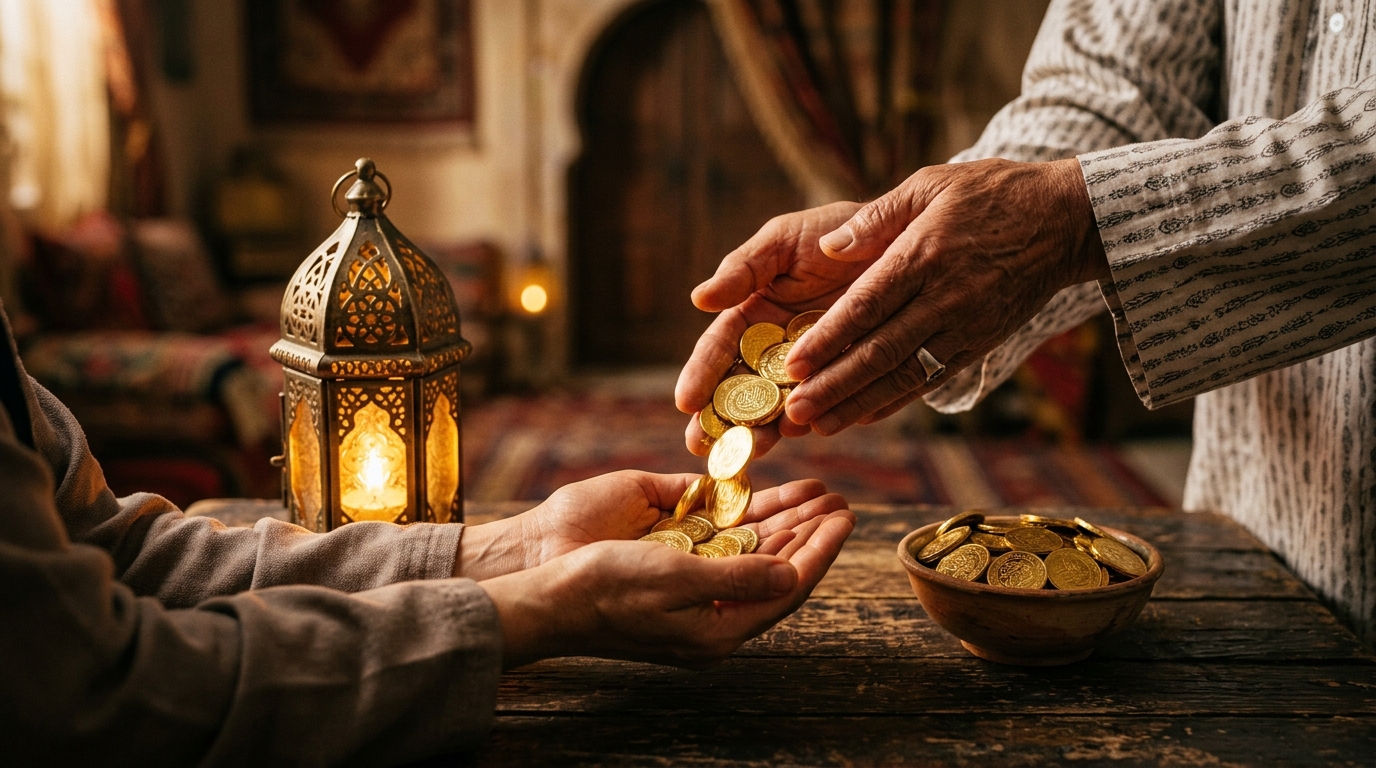
Zakat is a required form of charity and one of the five pillars of Islam. Muslims who have qualifying wealth above the nisab threshold generally give 2.5% of their zakatable wealth to eligible people in need. It is not the same as ordinary charity because zakat is a religious obligation for those who qualify.
Zakat is often paid during Ramadan, when many Muslims review their finances and increase their charitable giving. However, it can be paid at any time once a person’s zakat year is complete.
Who Must Pay Zakat?
Zakat generally applies to a Muslim whose zakatable wealth:
- Reaches or exceeds the nisab threshold.
- Remains above that threshold for one lunar year.
- Includes wealth such as cash, savings, gold, silver, investments and business stock.
The nisab is calculated using the value of 87.48 grams of gold or 612.36 grams of silver. Gold and silver prices change regularly, so the current value should be checked before calculating zakat. Different scholars and organisations may recommend using different nisab standards.
How Much Zakat Is Due?
For most cash and savings-based zakat calculations, the standard rate is 2.5%, or one-fortieth, of a person’s net zakatable wealth.
Simple example
Suppose your zakatable wealth includes:
- Cash and savings: $7,000
- Gold and investments: $4,000
- Short-term debts and liabilities: $1,000
Your net zakatable wealth would be:
$7,000 + $4,000 − $1,000 = $10,000
Your zakat would be:
$10,000 × 2.5% = $250
Other example:
- Total zakatable wealth: $10,000
- Immediate liabilities (debts, bills): $1,000
- Net zakatable wealth: $9,000
- Zakat to pay: $9,000 × 0.025 = $225
Rules for deducting debts, valuing gold jewellery, calculating investments and handling business assets can differ between schools of Islamic law. For a personal calculation, consult a trusted scholar or use a reputable zakat calculator.
What Wealth Counts?
Common zakatable assets may include:
- Money in bank accounts.
- Cash kept at home.
- Gold and silver.
- Shares, investments and some retirement assets.
- Business inventory and trade goods.
- Money owed to you that you expect to receive.
Personal-use items such as your main home, clothing, furniture and everyday vehicle are generally not included. Property held for rental or investment may require a different calculation, so professional guidance may be helpful.
Who Can Receive Zakat?
The Quran specifies eight categories of people who are eligible to receive zakat:
- The poor (Al-Fuqara)
- The needy (Al-Masakeen)
- Those employed to collect zakat
- Those whose hearts are to be reconciled (new Muslims or those inclined toward Islam)
- Those in bondage (to free captives or slaves)
- Those in debt (Al-Gharimin)
- In the cause of Allah (Fisabilillah)
- The stranded traveler (Ibnas Sabil)
Zakat cannot be used for infrastructure, administrative costs, or given to just anyone. It must reach these specific groups.
A person should give zakat through a trustworthy organisation that explains how the money will be distributed. Zakat funds should be kept separate from general donations when an organisation receives them for a specific purpose.
Zakat and Sadaqah: What Is the Difference?
Zakat is obligatory for Muslims who meet the required conditions. Sadaqah is voluntary charity and can be given at any time, regardless of whether a person meets the nisab threshold. (Zakat vs Sadqah)
Sadaqah may include:
- Giving money to someone in need.
- Providing food or water.
- Supporting an educational project.
- Helping a traveller.
- Offering a useful service.
- Sadaqah jariyah, or ongoing charity, such as funding a water well.
There is no fixed percentage for sadaqah.
What Is Zakat al-Fitr?
Zakat al-Fitr is separate from annual wealth-based zakat. It is given at the end of Ramadan so that people in need can share in the joy of Eid. It should be distributed before the Eid prayer, according to the commonly cited guidance.
The amount and accepted form of Zakat al-Fitra may vary by country and scholarly opinion. Check with a local mosque or recognised Islamic organisation for the current amount.
When Is Zakat Paid?
Zakat can be paid at any time during the lunar year. Many Muslims choose to pay it during Ramadan, believing that good deeds during this blessed month carry multiplied rewards. The most popular time is on Laylatul Qadr (the Night of Power), which falls during the last ten nights of Ramadan. Giving zakat on this night is considered especially virtuous.
In some Muslim-majority countries like Saudi Arabia, Malaysia, and Pakistan, zakat is legally enforced like a tax. In others, it remains a personal religious obligation.
Quick Zakat Checklist
- Find the current nisab value.
- List your zakatable assets.
- Deduct eligible immediate liabilities according to your chosen method.
- Check whether your wealth has remained above nisab for one lunar year.
- Calculate 2.5% of your net zakatable wealth.
- Give it to eligible recipients through a trusted channel.
Zakat is both a financial responsibility and an act of worship. Because calculations can vary for businesses, investments, gold, pensions and debts, this guide should not replace advice from a qualified Islamic scholar.
Calculating Your Zakat
- List all your zakatable assets — cash, savings, gold, investments, business inventory
- Deduct any immediate liabilities — debts, bills, expenses due within the year
- Check if your net wealth meets the nisab threshold (based on current gold or silver value)
- Calculate 2.5% of your net zakatable wealth
- Donate to a trustworthy charity or directly to eligible recipients
Many Islamic organizations offer online zakat calculators to simplify this process.
Ramadan Calendar 360 — Your complete guide to Ramadan, Eid, and Islamic worship. Visit us at Ramadan Calendar 360 for prayer times, Ramadan calendars, and more.