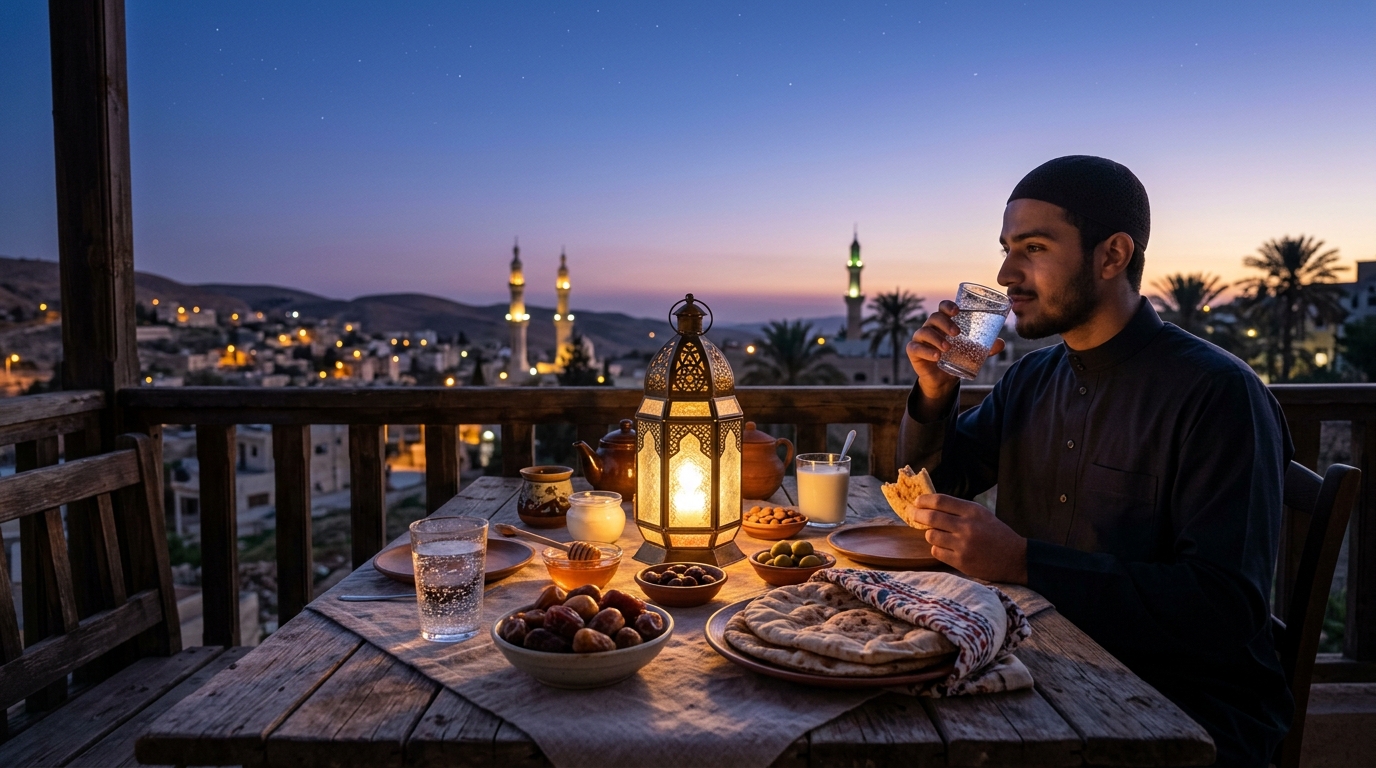
Sehri (Suhur): The Blessed Pre-Dawn Meal
Scholar Verified
Written by: M. Hamza
Researcher: Ayesha Rahman
Reviewed by: Omar Abdullah
Last Review: 9 September 2026
Our Ramadan information is carefully examined by a qualified Islamic reviewer to help ensure that religious details, references, and guidance are presented accurately and responsibly.
What is Sehri?
"Sehri" (also known as "Suhur," "Sahari," or "Sahur") refers to the meal consumed by Muslims before they begin their fasting for the entire day as part of the holy month of Ramadan. It is a meal that occurs before dawn prayers. It begins the day of fasting that will continue up to sunset.
The Meaning of Sehri
The word "Sehri" is an Arabic word, the root of which is "سَحَر" (sahar), meaning "the last part of the night" or "dawn." This Arabic root word has also been transliterated into the Persian language as "سَحَری" (sahari), meaning "of the dawn." This name beautifully describes what Sehri is all about: it is the food eaten in those blessed early hours just before the sunrise.
The Prophet Muhammad (peace be upon him) said:
"Take Sehri, for indeed there is barakah (blessing) in it."
(Sahih Bukhari, 1923)
The Qur'anic Guidance on Sehri
Allah says in the Qur'an:
"كُلُوا وَاشْرَبُوا حَتَّى يَتَبَيَّنَ لَكُمُ الْخَيْطُ الْأَبْيَضُ مِنَ الْخَيْطِ الْأَسْوَدِ مِنَ الْفَجْرِ"
"Eat and drink until the white thread of dawn becomes distinct to you from the black thread."
(Surah Al-Baqarah, 2:187)
This verse clearly permits eating and drinking during the night until the first light of dawn appears. It provides the divine permission and framework for Sehri—making it not just a cultural habit but a Qur'anically sanctioned practice.
Why Is Sehri So Important?
1. It is a Source of Blessing (Barakah)
Sehri is more than a meal; it is worship that comes with the blessings of Allah (SWA). Even if you have taken a small amount of water in your stomach, you are doing something that will fetch you some spiritual rewards.
2. It Prepares the Body for Fasting
Fasting in Islam is quite difficult for the body as it requires a person to abstain from eating anything throughout the day. Therefore, Sehri plays an important role by giving the necessary strength to the body in the form of:
- Complex carbohydrates (oats, whole grains) for sustained energy
- Proteins (eggs, yogurt, lentils) for muscle maintenance
- Healthy fats (nuts, avocados) for satiety
- Fluids (water, herbal teas) to prevent dehydration
3. It Prepares the Soul for Worship
The time of Sehri coincides with the last third of the night—a period when Allah descends to the lowest heaven and asks the following:
"Who is calling upon Me so that I may respond to him? Who is asking of Me so that I may give him? Who is seeking My forgiveness so that I may forgive him?"
(Sahih Bukhari, 1145)
This is the most spiritually charged time of the night. Eating Sehri allows you to be awake during this blessed window, making dua (supplication), seeking forgiveness, and drawing closer to Allah.
When Should Sehri Be Eaten?
The ideal time for Sehri is:
- Delayed to just before Fajr (the dawn prayer)
- Leaving enough time for wudhu (ablution), Fajr prayer, and personal dua
This follows the Sunnah of the Prophet ﷺ, who used to delay his Sehri to the last moments before dawn. This practice ensures that:
- You benefit from the maximum amount of nighttime worship.
- You are awake during the blessed last third of the night.
- Your fast begins with full preparation.
Nutrition Tips for a Healthy Sehri
- Eat slow-digesting foods (whole grains, oats, beans)
- Include protein (eggs, chicken, fish, dairy)
- Stay hydrated (drink plenty of water, avoid caffeinated drinks)
- Eat dates—they provide natural sugars and essential nutrients.
- Avoid salty foods—they increase thirst during the day.
- Eat fruits and vegetables for vitamins and minerals
What to Eat for Sehri? Across the Muslim World
| Region | Common Foods |
|---|---|
| South Asia (Pakistan, India, Bangladesh) | Paratha, lentils (dal), yogurt, fruits, and sometimes spicy omelets |
| Arab Countries | Dates, labneh (strained yogurt), eggs, olive oil, and herbal teas |
| Turkey | Soup, cheese, olives, bread, and tea |
| Southeast Asia (Indonesia, Malaysia) | Rice dishes, fried noodles, and sweet treats |
The Spiritual Dimension of Sehri
1. A Time for Dua and Forgiveness
This is the perfect time to make dua. While there is no specific prophetic dua for Sehri, you can:
- Make the intention: "نَوَيْتُ صَوْمَ غَدٍ لِلّٰهِ تَعَالَى" "I intend to fast tomorrow for Allah, the Most High."
- Seek forgiveness: "Astaghfirullah" (I seek forgiveness from Allah.)
- Send salutations upon the Prophet: "Allahumma salli 'ala Muhammad."
- Make personal duas for yourself, your family, and the Ummah.
In many parts of Asia, Muslims commonly recite the following Sehri (Suhoor) dua before beginning their fast:
وَبِصَوْمِ غَدٍ نَّوَيْتُ مِنْ شَهْرِ رَمَضَانَ
"I intend to keep the fast for tomorrow in the month of Ramadan."
2. A Time for Tahajjud Prayer
The last third of the night is the ideal time for Tahajjud (the night prayer). Even if you pray just two rak'ahs, you are engaging in a highly recommended act of worship.
3. A Time for Reflection and Remembrance
The quiet hours of Sehri are perfect for:
- Reading and reflecting on the Qur'an
- Making dhikr (remembrance of Allah)
- Repenting for past sins
- Planning your day with spiritual intention
The Tradition of the Musahharati
In many Muslim countries, the Musahharati (or "Ramadan drummer") walks through the streets before dawn, beating a drum and singing traditional poems to wake people for Sehri.
Historical Significance
- Bilal ibn Rabah (may Allah be pleased with him) is considered the first Musahharati in Islamic history.
- The tradition continues today in countries like Egypt, Syria, Palestine, Jordan, and Bangladesh.
Modern Challenges
With alarm clocks, loud cities, and changing lifestyles, the tradition of the Musahharati is gradually disappearing. However, in places like Old Dhaka, Bangladesh, the beautiful tradition of singing Qasidas to wake people for Sehri still survives.
Common Mistakes to Avoid
- ❌ Skipping Sehri entirely
- ❌ Eating too much heavy, greasy food
- ❌ Not drinking enough water
- ❌ Missing the spiritual opportunity (focusing only on food)
- ❌ Waking up too late and missing Fajr prayer
- ❌ Rushing through the meal without making dua
The Blessing in the Simple Things
Even if your Sehri is simple—a piece of bread, a glass of water, or a few dates—the blessing lies not in the quantity but in the intention and the timing. The Prophet ﷺ said,
"The difference between our fasting and the fasting of the People of the Book is the meal of Sehri."
(Sahih Muslim)
This meal is a mark of distinction for the Muslim Ummah. It is a gift from Allah to strengthen both body and soul.
A Beautiful Reminder
Sehri is more than just a meal—it is a moment of divine connection. It is:
- A time when Allah descends in mercy
- A time when duas are answered
- A time when forgiveness is offered
- A time that prepares us for the fast of the day
- A time that brings families together
May Allah bless our Sehri, accept our fasts, and grant us the strength to worship Him with sincerity. Ameen.
"The food nourishes the body, while the dua, dhikr, and tears nourish the heart. To miss this window is to deprive oneself of divine attention and forgiveness."
Ramadan Calendar 360 — Your complete guide to Ramadan, Eid, and Islamic worship. Visit us at Ramadan Calendar 360 for prayer times, Ramadan calendars, and more.