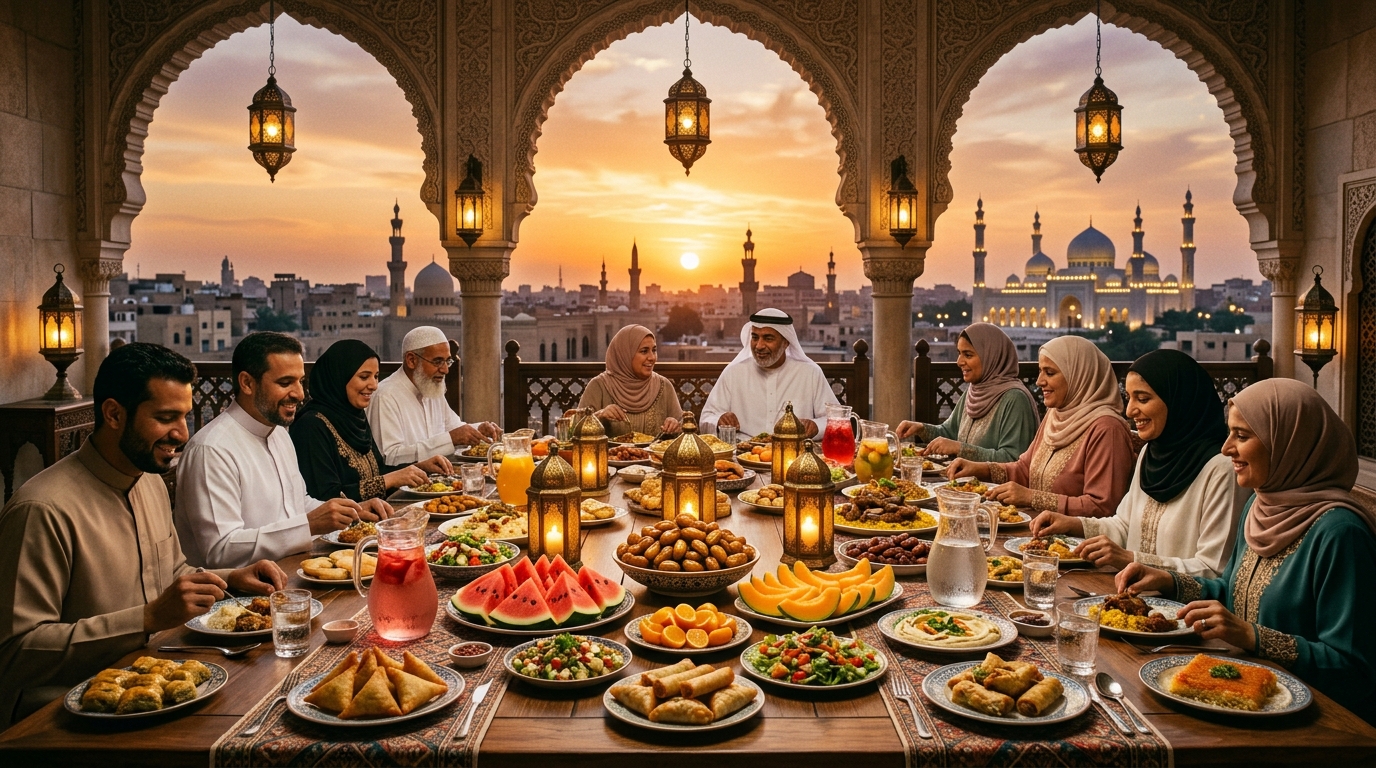
The Joyful Moment of Breaking Fast (Iftar)
Scholar Verified
Written by: M. Hamza
Researcher: Ayesha Rahman
Reviewed by: Omar Abdullah
Last Review: 9 September 2026
Our Ramadan information is carefully examined by a qualified Islamic reviewer to help ensure that religious details, references, and guidance are presented accurately and responsibly.
Iftar (Arabic: إفطار, romanized: ifṭār, lit. 'breakfast' or 'breaking of the fast') is the evening meal consumed by Muslims to break their daily fast (sawm) at sunset during the holy month of Ramadan. It is the moment when the day's abstinence from food, drink, and other physical needs comes to an end, and it is met with immense joy, gratitude, and spiritual reflection.
Iftar is the counterpart to Sehri (the pre-dawn meal). Together, these two meals anchor the fasting day—Sehri provides the energy to begin, and Iftar provides the nourishment and relief to conclude. The Prophet Muhammad ﷺ described the joy of breaking the fast beautifully:
"للصائم فرحتان: فرحة عند فطره، وفرحة عند لقاء ربه"
"The fasting person has two moments of joy: one when he breaks his fast, and one when he meets his Lord."
(Sahih Bukhari, Sahih Muslim)
The Key Elements of Iftar
| Aspect | Description |
|---|---|
| Timing | Immediately at sunset (Maghrib) |
| Sunnah foods | Dates + Water |
| Core Dua | "Allahumma laka sumtu wa 'ala rizqika aftartu" |
| Blessed moment | Make heartfelt dua before breaking |
| Balanced meal | Protein, carbs, hydration, vegetables |
| Moderation | Avoid overeating; one-third food, one-third drink, one-third air |
| Community | Share with family and the needy |
Qur'anic Permission
Allah commands in the Qur'an:
"ثُمَّ أَتِمُّوا الصِّيَامَ إِلَى اللَّيْلِ"
"Then complete the fast until the night [i.e., sunset]."
(Surah Al-Baqarah, 2:187)
This verse clearly indicates that fasting ends at sunset, and it is at this precise moment that Iftar begins.
The Sunnah: Hasten to Break the Fast
The Prophet ﷺ emphasized the importance of breaking the fast immediately after sunset, without unnecessary delay:
"لا يزال الناس بخير ما عجلوا الفطر"
"The people will continue to be upon goodness as long as they hasten to break the fast."
(Sahih Bukhari, 1957; Sahih Muslim, 1098)
"إذا أقبل الليل من هاهنا، وأدبر النهار من هاهنا، وغربت الشمس، فقد أفطر الصائم"
"When the night approaches from this side, and the day departs from that side, and the sun sets, then the fasting person should break his fast."
(Sahih Bukhari, 1954)
The Prophet ﷺ consistently broke his fast with fresh dates (rutab), or if not available, dry dates (tamr), followed by a few sips of water.
"كان رسول الله ﷺ يفطر على رطبات قبل أن يصلي، فإن لم تكن رطبات فتمرات، فإن لم تكن تمرات حسا حسوات من ماء"
"The Messenger of Allah ﷺ used to break his fast with fresh dates before praying. If fresh dates were not available, he would break it with dry dates. If dry dates were not available, he would take a few sips of water."
(Sunan Abu Dawud, 2356; Sunan al-Tirmidhi, 696)
Why Dates?
- Provide an immediate natural sugar boost to restore blood glucose levels
- Rich in fiber, potassium, and essential minerals
- Easy to digest and hydrating
- Fulfill the Prophetic Sunnah
The Sequence:
- Break the fast with dates (odd number, e.g., 1, 3, or 5)
- Followed by a few sips of water
- Perform Maghrib prayer
- Then eat the main Iftar meal
The Recommended Dua for Iftar
The Prophet ﷺ taught a specific supplication to recite at the moment of breaking the fast:
اللَّهُمَّ لَكَ صُمْتُ وَعَلَى رِزْقِكَ أَفْطَرْتُ
Allahumma laka sumtu wa 'ala rizqika aftartu.
"O Allah, for You I have fasted, and upon Your provision I have broken my fast."
(Sunan Abu Dawud, 2358)
Extended Dua for Iftar
Many scholars also recite this comprehensive supplication:
ذَهَبَ الظَّمَأُ، وَابْتَلَّتِ الْعُرُوقُ، وَثَبَتَ الْأَجْرُ إِنْ شَاءَ اللَّهُ
Dhahabaz-zama'u, wabtallatil-'urooqu, wa thabatal-ajru insha'Allah.
"The thirst has gone, the veins are moistened, and the reward is confirmed, if Allah wills."
(Sunan Abu Dawud, 2357; Sunan al-Darqutni)
The Powerful Moment: When Duas Are Accepted
The moment of breaking the fast is one of the most spiritually potent times for making supplication (dua). The Prophet ﷺ said:
"إن للصائم عند فطره دعوة لا ترد"
"Indeed, for the fasting person, at the time of breaking his fast, there is a supplication that is not rejected."
(Sunan Ibn Majah, 1753)
"ثلاث لا ترد دعوتهم: الإمام العادل، والصائم حتى يفطر، ودعوة المظلوم"
"There are three whose supplication is not rejected: the just ruler, the fasting person until he breaks his fast, and the supplication of the oppressed."
(Sunan al-Tirmidhi, 3598)
- Take a moment before taking the first bite to raise your hands and sincerely supplicate to Allah
- Ask for forgiveness, guidance, mercy, and your personal needs
- This is the golden moment—do not miss it!
A Traditional and Healthy Iftar is Typically Divided into Phases:
Phase 1: The Immediate Break (Sunnah)
- Dates (1-3) + Water or milk
- A small portion of fresh fruit (optional)
- Recite the dua
- Pray Maghrib
Phase 2: The Main Meal (After Maghrib)
- Soup (lentil, vegetable, or chicken) — warms the stomach and replenishes fluids
- Main dish — lean protein (chicken, fish, lamb), complex carbohydrates (rice, whole wheat bread), and vegetables
- Salad — fresh greens and vegetables for hydration and vitamins
- Hydration — plenty of water, infused water, or fresh fruit juices (without added sugar)
Phase 3: Dessert (Optional)
- Fresh fruits
- Light sweets (in moderation, e.g., milk-based desserts, fruit salad)
- Avoid heavy, sugary pastries that cause sluggishness for Taraweeh prayer
Best Foods to Eat for Iftar
Choose light, nutritious foods at Iftar to restore energy, rehydrate the body, and support digestion. Dates, water, soups, lean proteins, whole grains, vegetables, fruits, and yoghurt are excellent choices for a balanced Iftar meal.
Avoid heavy, overly sugary, salty, and spicy foods at Iftar, as they may cause bloating, indigestion, thirst, or tiredness. Fried foods, sugary drinks, excessive red meat, carbonated drinks, and very spicy dishes are also limited. Instead, choose light, balanced foods that provide steady energy and help you stay comfortable during Taraweeh.
The takeaway: Break your fast moderately and focus on nourishing foods rather than overeating.
- Start small – Break with dates and water; wait 15-20 minutes before eating the main meal.
- Eat slowly – Allow your stomach to adjust after a day of being empty.
- Hydrate gradually – Drink water in intervals during the evening, not all at once.
- Chew thoroughly – This aids digestion after a long fast.
- Balance your plate – Half vegetables/salad, one-quarter protein, one-quarter carbs.
- Avoid overeating – Remember, the goal is worship, not indulgence.
- Don't skip Suhoor – A good Iftar is followed by a good Sehri!
The Social & Spiritual Benefits
1. A Communal Act of Worship
Iftar is often shared with family, friends, and neighbors. The Prophet ﷺ emphasized the immense reward of feeding others:
"Whoever gives food to a fasting person to break his fast will have a reward like his, without diminishing the reward of the fasting person in the slightest." (Sunan al-Tirmidhi, 807)
2. Strengthening Community Bonds
Iftar gatherings (known as Iftar parties or community meals) bring people together, bridging gaps and fostering a sense of unity and brotherhood/sisterhood in the Ummah.
3. Preparing for Night Worship
Iftar is the fuel for the night. A well-balanced Iftar enables Muslims to perform the Taraweeh and Tahajjud prayers with energy and concentration, making the night spiritually productive.
Final Reflection
Iftar is not merely a meal—it is a spiritual milestone marking the completion of another day of obedience to Allah. It is a time of gratitude, humility, and joy. When you lift your hands in supplication, know that your dua is being heard. When you break your fast, remember the blessings of Allah upon you. When you share your meal, know that you are earning immense rewards.
May Allah accept our fasts, answer our supplications, and grant us the strength to worship Him with sincerity throughout Ramadan. Ameen. 🤲
"The food nourishes the body, but the dua and dhikr nourish the soul. The moment of Iftar is a bridge between physical relief and spiritual elevation."
Frequently Asked Questions About Iftar
The Sunnah is to break the fast promptly at Maghrib with fresh or dried dates and water before performing the Maghrib prayer.
Yes, authentic hadith indicate that the supplication of the fasting person when breaking their fast is answered by Allah.
It is best to avoid overly greasy fried foods, carbonated sugary drinks, and heavy meals that cause indigestion or fatigue before Taraweeh prayer.
Ramadan Calendar 360 — Your complete guide to Ramadan, Eid, and Islamic worship. Visit us for prayer times, Ramadan calendars, and more.