What Is Fasting in Ramadan?
Scholar Verified
Written by: M. Hamza
Researcher: Ayesha Rahman
Reviewed by: Omar Abdullah
Last Review: 9 September 2026
Our Ramadan information is carefully examined by a qualified Islamic reviewer to help ensure that religious details, references, and guidance are presented accurately and responsibly.
Fasting during the holy month of Ramadan is the fourth pillar of Islam. In Arabic language, fasting is known as “Sawm.” For this month, people who are able to fast abstain from food, drinks, smoking, and sex between the time of “Fajr” and “Maghrib.”
The fast is not limited to avoiding food and drink only. In Ramadan month, people also restrain themselves from getting angry, refrain from backbiting, talk in soft voices, do more prayers, read the holy Quran, and help poor people.
Allah says in the Quran:
“O believers! Fasting is prescribed for you—as it was for those before you—so perhaps you will become mindful of Allah.”
Surah Al-Baqarah, 2:183
Why Do Muslims Fast?
Muslims fast because Allah has commanded it. Ramadan helps people build self-control, patience, gratitude, and a stronger connection with Allah.
When a person experiences hunger and thirst, they can better understand the struggles of people living in poverty. This encourages kindness, charity, and care for others.
Fasting also gives Muslims a chance to leave bad habits behind. It is a month to reflect, ask for forgiveness, and make a fresh start.
How Does Ramadan Fasting Work?
A Ramadan fast begins at Fajr, the dawn prayer, and ends at Maghrib, sunset.
- Suhoor/Sehri: The pre-dawn meal eaten before Fajr.
- Niyyah: The intention to fast for Allah. It is made in the heart.
- Fasting hours: No eating, drinking, smoking, or sexual relations from Fajr to Maghrib.
- Iftar: The meal used to break the fast at sunset.
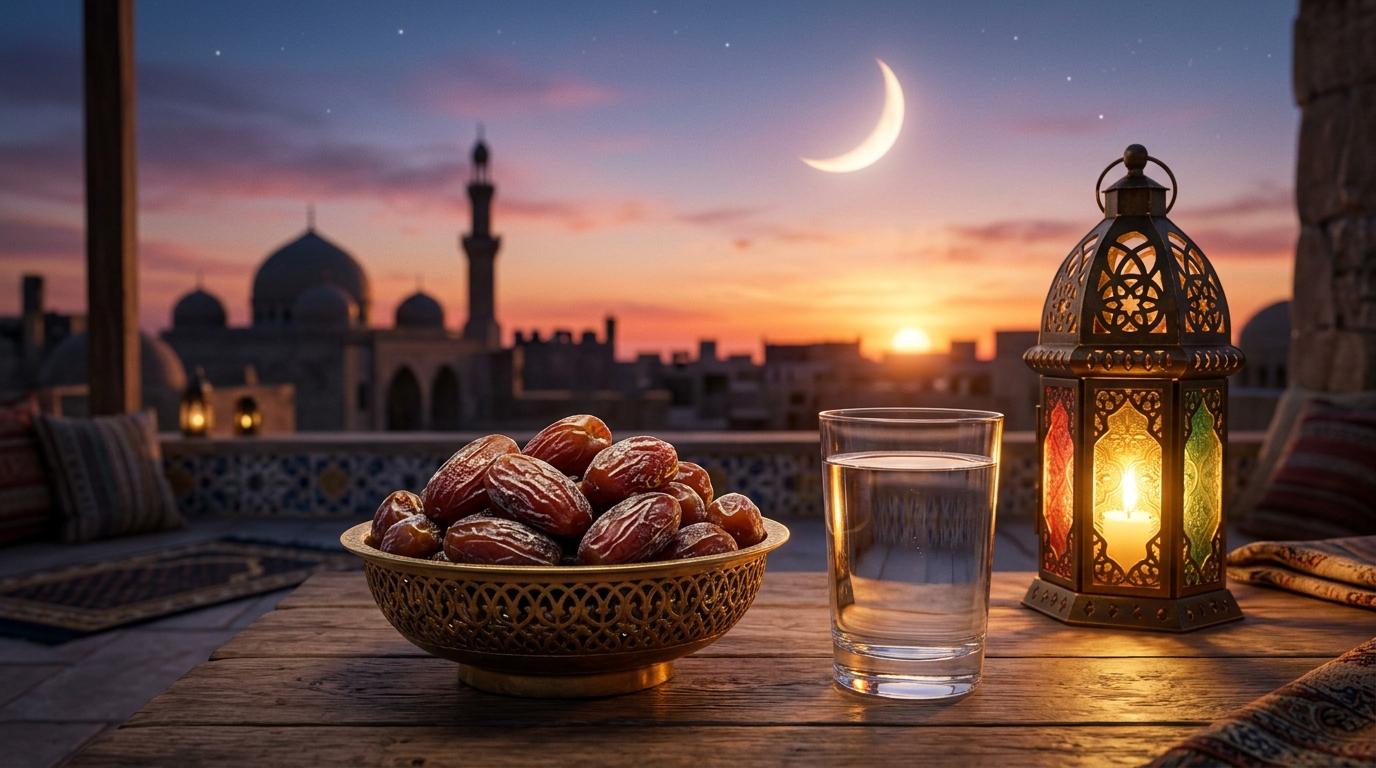
Many Muslims break their fast with a date and water, following the Sunnah of Prophet Muhammad ﷺ. A common dua at iftar is:
“Dhahaba adh-dhama’u, wabtallatil-‘urooqu, wa thabatal-ajru in sha Allah.”
Meaning: “The thirst has gone, the veins are moistened, and the reward is confirmed, if Allah wills.”
What Breaks the Fast?
A fast is broken by deliberately:
- Eating or drinking
- Smoking or vaping
- Taking nourishment through food or drink
- Having sexual relations
- Vomiting intentionally
Eating or drinking by mistake does not break the fast. The person should continue fasting when they remember.
Fasting is also more than physical restraint. Backbiting, lying, swearing, arguing, and hurting others can reduce the spiritual reward of the fast. Ramadan is a time to improve both actions and character.
Who Is Exempt From Fasting?
Islam does not ask people to harm themselves. Some people are exempt from fasting, including:
- Children who have not reached puberty
- People who are seriously ill
- Elderly people who cannot fast
- Travellers
- Pregnant or breastfeeding women if fasting may cause harm
- Women during menstruation or post-natal bleeding
- People with certain long-term medical conditions
If the reason is temporary, such as illness, travel, pregnancy, or menstruation, missed fasts are usually made up later. This is called Qada.
If someone is permanently unable to fast due to old age or chronic illness, they may need to give Fidya by feeding a person in need for every missed fast. Always speak to a qualified scholar about your personal situation, especially if you have a medical condition.
The Purpose of Ramadan
Ramadan is a month dedicated to prayer, compassion, and personal improvement. The believers try to pray in time, donate money, read the Qur’an, mend relations, and refrain from doing wrong things.
The last ten days are particularly important, since they involve the night of Laylatul Qadr – the Night of Power. Believers devote these days to praying and asking for Allah’s mercy and rewards.
After the conclusion of the month of Ramadan comes the holiday called Eid ul-Fitr. Prior to the Eid prayer, people who can afford it pay Zakat al-Fitr for poor families to celebrate the festival as well.
Ramadan Calendar 360 — Your complete guide to Ramadan, Eid, and Islamic worship. Visit us at Ramadan Calendar 360 for prayer times, Ramadan calendars, and more.