Signs of Laylatul Qadr
Scholar Verified
Written by: M. Hamza
Researcher: Ayesha Rahman
Reviewed by: Omar Abdullah
Last Review: 9 September 2026
Our Ramadan information is carefully examined by a qualified Islamic reviewer to help ensure that religious details, references, and guidance are presented accurately and responsibly.
Frequently Asked Questions
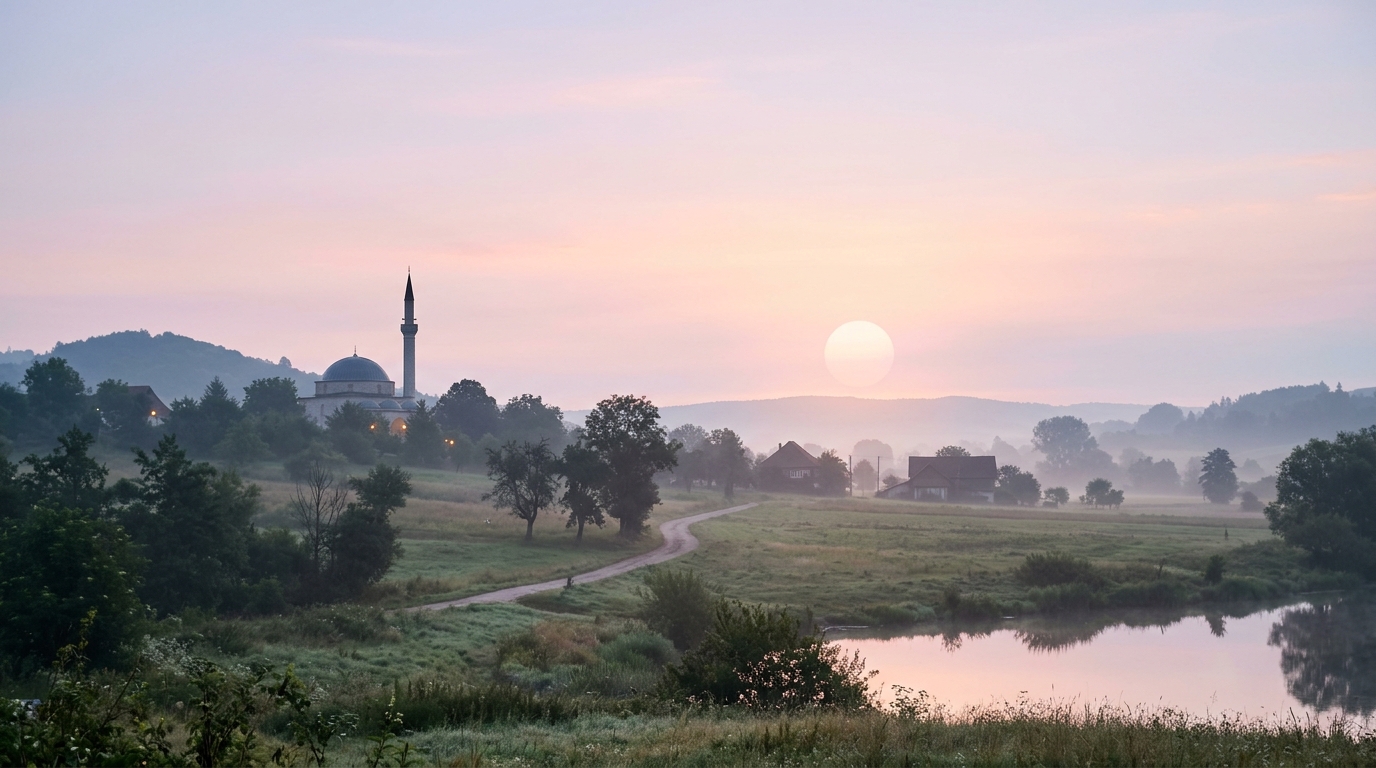
تُصْبِحُ الشَّمْسُ صَبِيحَةَ تِلْكَ اللَّيْلَةِ مِثْلَ الطَّسْتِ لَيْسَ لَهَا شُعَاعٌ حَتَّى تَرْتَفِعَ
Transliteration: Tuṣbiḥush-shamsu ṣabīḥata tilkal-laylati mithlat-ṭasti laysa lahā shu‘ā‘un ḥattā tartafi‘.
"The sun rises the morning after that night like a basin, without rays, until it rises high."
— Sunan Abi Dawud 1378
A similar report is also recorded in Sahih Muslim. The sign is observed after the night has ended, so it cannot be used to know with certainty which night was Laylatul Qadr before dawn.
A clear night or a bright moon may appear in some descriptions of Laylatul Qadr, but the moon’s appearance is not a confirmed way to identify the night.
The moon changes throughout Ramadan, and weather and visibility differ across locations. A bright moon, clear sky or calm weather should not be treated as definite proof.
Many popular lists mention rain, unusual dreams, a special feeling, animals becoming quiet or roosters crowing as signs of Laylatul Qadr.
These claims should not be presented as established signs unless they are supported by a reliable hadith. A person may experience peace or spiritual comfort during worship, but personal feelings do not confirm that a particular night was Laylatul Qadr.
Similarly, rain or a dream may occur on any night of Ramadan. They are not reliable evidence by themselves.
The exact night of Laylatul Qadr has been kept unknown so that Muslims continue worshipping throughout the last ten nights instead of concentrating only on one date.
The Prophet ﷺ said:
تَحَرَّوْا لَيْلَةَ الْقَدْرِ فِي الْوِتْرِ مِنَ الْعَشْرِ الأَوَاخِرِ مِنْ رَمَضَانَ
Transliteration: Taḥarrū Laylat al-Qadri fil-witri minal-‘ashril-awākhiri min Ramaḍān.
"Seek Laylat al-Qadr in the odd-numbered nights of the last ten nights of Ramadan."
— Sahih al-Bukhari 2017
The odd nights are the 21st, 23rd, 25th, 27th and 29th nights. Although many Muslims consider the 27th night especially likely, it is not correct to say that it is definitely Laylatul Qadr every year.
Do not spend the last ten nights waiting for a particular sign. Instead, use the time for worship:
- Pray Isha and Taraweeh.
- Offer voluntary night prayer
- Read and understand the Qur’an
- Make sincere dua
- Ask Allah for forgiveness
- Give charity
- Remember Allah through dhikr
- Repent from sins
- Avoid arguments and unnecessary distractions
The Prophet ﷺ taught Aisha رضي الله عنها this dua for Laylatul Qadr:
Transliteration: Allāhumma innaka ‘afuwwun karīmun tuḥibb al-‘afwa fa‘fu ‘annī.
“O Allah, You are Most Pardoning and Generous. You love to pardon, so pardon me.”
— Jami‘ at-Tirmidhi 3513
The signs are subtle. They are not meant to give you certainty, but to guide you. The night remains hidden so that you strive in worship throughout the last ten nights. The signs are a reward for those who seek it with sincerity.
Don't become obsessed with searching for signs. The purpose of Laylatul Qadr is worship, not meteorology.
Remember: The signs are not a guarantee. The exact night remains hidden. Focus on worshipping Allah in the last ten nights, especially the odd nights. That is the real way to catch Laylatul Qadr.
Signs Commonly Mentioned That Aren't Well-Supported
A few claims circulate widely but don't have strong support in authentic hadith, and it's worth being clear about the difference:
- Rain on Laylatul Qadr: There is no authentic hadith directly linking rainfall to this night. A dream reported from the Prophet involving rain and mud on his face relates to a specific narration about a particular year, not a general sign to expect every year.
- Dogs not barking, or unusual animal behaviour: These claims are widely repeated online but are not found in authentic hadith collections.
- Shooting stars or unusual celestial events: While some narrations reference the absence of certain disturbances during the night, dramatic celestial signs are not part of the authentic descriptions.
Treating unverified claims as confirmed signs can create false expectations, so it's worth relying on the hadith that scholars have actually graded as authentic or sound rather than claims that circulate informally.
The most widely referenced and well-supported sign is the sunrise the following morning appearing weak and without strong rays, mentioned across multiple authentic hadith.
No, there is no authentic hadith confirming rain as a general sign of the night. Some people associate gentle rain with mercy, but it isn't a fixed or reliable indicator.
Scholars generally point to the odd nights of the last ten days of Ramadan, with the 27th night frequently mentioned, though the exact night is not confirmed and can vary by year.
No. Since the exact night is hidden, the recommended approach is to increase prayer, Quran recitation, and dua throughout the last ten nights, rather than waiting to identify signs after the fact.
Most narrations point to the odd nights, but some scholars note it isn't entirely ruled out on other nights within the last ten, which is part of why sustained worship throughout the period is recommended.
Ramadan Calendar 360 — Your complete guide to Ramadan, Eid, and Islamic worship. Visit us at ramadancalendar360.org for prayer times, Ramadan calendars, and more.